
14May
Cloud ERP Adoption and Transformation in Gulf Countries
Cloud ERP in GCC
The Gulf Countries are witnessing a fast growth in cloud ERP adoption as a main force of digital change. This trend is moved by government-led initiatives. This transforms business demands and technological advancements that are reshaping the regional economic landscape.
Overcoming Cultural and Regulatory Challenges in Cloud ERP Adoption
One of the most primary challenges in Gulf countries for adapting Cloud ERP systems to the unique cultural and regulatory environments. Gulf countries have various business cultures and strict regulatory frameworks. These include data sovereignty laws and sector specific compliance needs. Successful ERP adoption needs customizing solutions to respect these cultural variation and regulatory mandates. This makes sure the alignment with local cybersecurity strategies such as UAE’s national cybersecurity strategy and Saudi Arabia’s Cloud First Policy. This approach reduces the risks and improves trust on the stakeholders.
Industry Specific Use Cases
The impact of Cloud ERP System depends on various industries, with different operational needs and challenges:
Manufacturing:- Cloud ERP allows to track real-time inventory, production, scheduling and quality control. This helps the manufacturers in the UAE and KSA to improve supply chain and decrease downtime.
Retail:- Retailers get advantage from combined CRM and inventory management modules. This supports omnichannel sales and improves customer experience. It is very important in the competitive market of Gulf Countries.
Logistics:- Cloud ERP smoothen the process of fleet management, route optimization and compliance with customer regulations. This improves the efficiency of logistics companies that have been operated throughout the GCC region.
Services:- Services providers combine cloud ERP for project management, resource allocation and financial reporting. This improve agility and client satisfaction.
Combining Cloud ERP to Bring Digital Transformation in Gulf Countries SMEs
Small and Medium-sized Enterprises (SMEs) in the Gulf are adopting cloud ERP at a very fast speed in order to improve scalability, agility and creativity. Cloud ERP solutions provide cost-effective access to modern functionalities that were accessible to big corporations in the past. This allows the SMEs to give tough competition to its competitor, improve operational efficiencies and respond quickly to the market changes. The change from the legacy systems to cloud based platforms are especially pronounced in sectors where agility and customer experiences are important.
Knowledge Management Framework for Cloud ERP Adoption Decision making in KSA
In Saudi Arabia, a structured knowledge management framework is rising to guide cloud ERP adoption decisions. This framework combines organizational knowledge, regulatory insights and technological assessment. It supports the CIOs and IT strategies in making informed decisions. It focuses on analyzing the cloud native abilities that align with the 2030 Vision objectives and digital change goals of Saudi Arabia. Such a framework makes sure that ERP adoption is strategic, sustainable and in compliance with national economic diversification plans.
Addressing Cybersecurity Concerns in Cloud ERP Deployments across Gulf Enterprises
Cybersecurity has always been an important concern in cloud ERP deployments. Gulf enterprises embracing Ai powered cloud native security tools that detect and minimize the threats. This ensures data integrity and confidentiality. These solutions are customized to meet the local compliance standards and point sector specific weak points. Improved cybersecurity measures are important to protect sensitive data in regulated industries. This supports the region's border goals of safe digital change.
Integration with Emerging Technologies
Advanced Cloud ERP platforms are combining modern technologies. This creates a smarter and more adaptive system:
Ai and ML:- Ai analytics offers predictive insights for demand prediction and risk management. On the other hand, Machine Learning algorithms automate daily tasks and decrease human error.
Internet of Things (IoT):- IoT sensors combined with ERP systems allow real-time observation of assets and environmental conditions. This is important for sectors such as manufacturing and logistics.
Automation and Robotics:- Workflow automation with ERP minimizes human interruption. This speeds up the process such as invoice approvals and compliance checks.
Combining Legacy System with Cloud ERP: Solution for Gulf Organizations
The shift from legacy systems to cloud ERP solutions indicates the technical challenges that include data migration and system compatibility. Gulf organizations are combining middleware solutions and hybrid cloud architectures to ensure smooth integration. This approach reduces disruption, preserves important business operations and allows gradual modernization.
How Digi-inn helps in Cloud ERP Adoption and Transformation in Gulf Countries?
Digi-inn accepts the unique cultural, regulatory and business environment in Gulf Countries. Digi-inn provides customized cloud ERP Solutions that comply with the needs and business practices. Our expertise in custom software development allows us to design and integrate the cloud ERP systems that aligns the data residency and sector specific regulations in the Gulf.
Digi-inn actively helps in both SMEs and big organizations in the Gulf for combining cloud ERP for digital change. By offering scalable, cloud-based ERP Platforms, they help businesses to minimize the costs, improve agility and customer experiences. We provide smooth integration of legacy systems with cloud ERP.
Apart from ERP implementations, Digi-inn provides Digital Marketing services to increase the value of cloud ERP adoption. Our expertise in SEO and digital presence improvement make sure that the businesses not only optimize internal operations but also strengthen their market visibility and customer engagement in the competitive Gulf marketplace.
Read more blogs
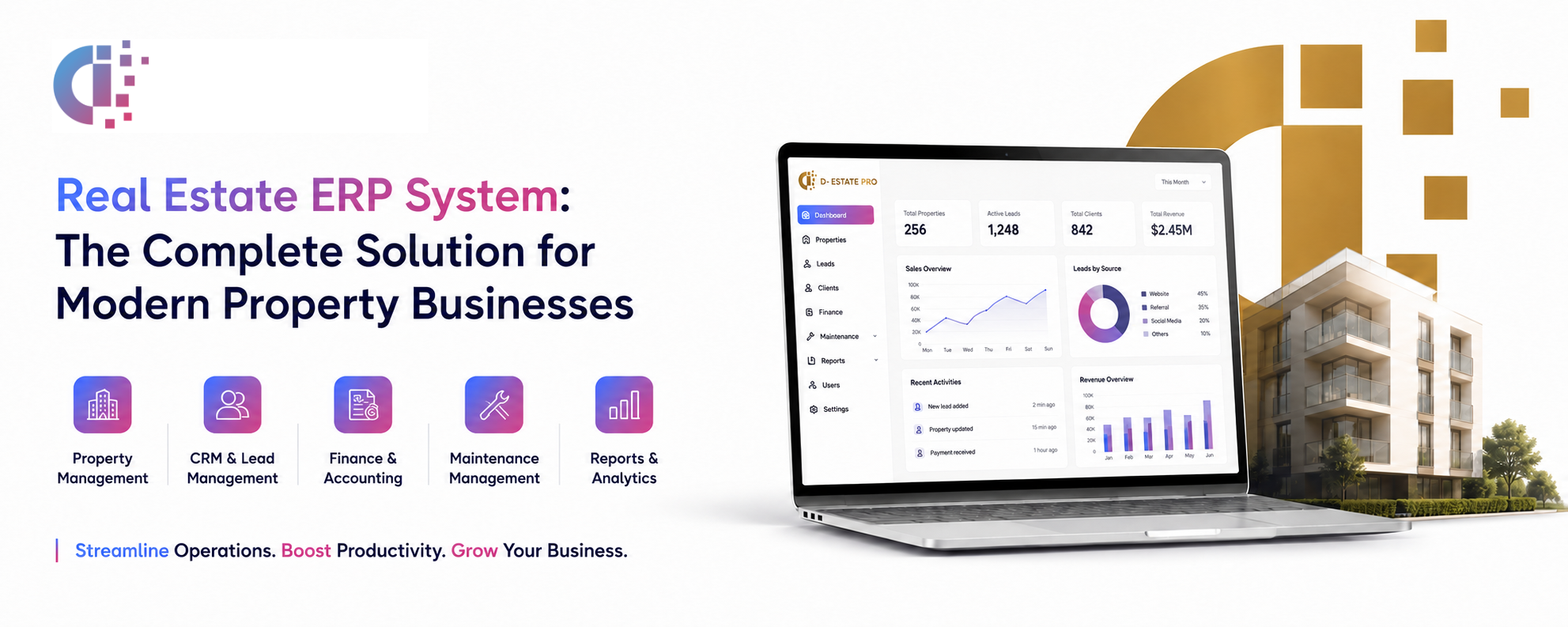
Real Estate ERP System: The Complete Solution for Modern Property Businesses
June 23, 2026, 7:14 a.m.



Leave A Comments