
19Feb
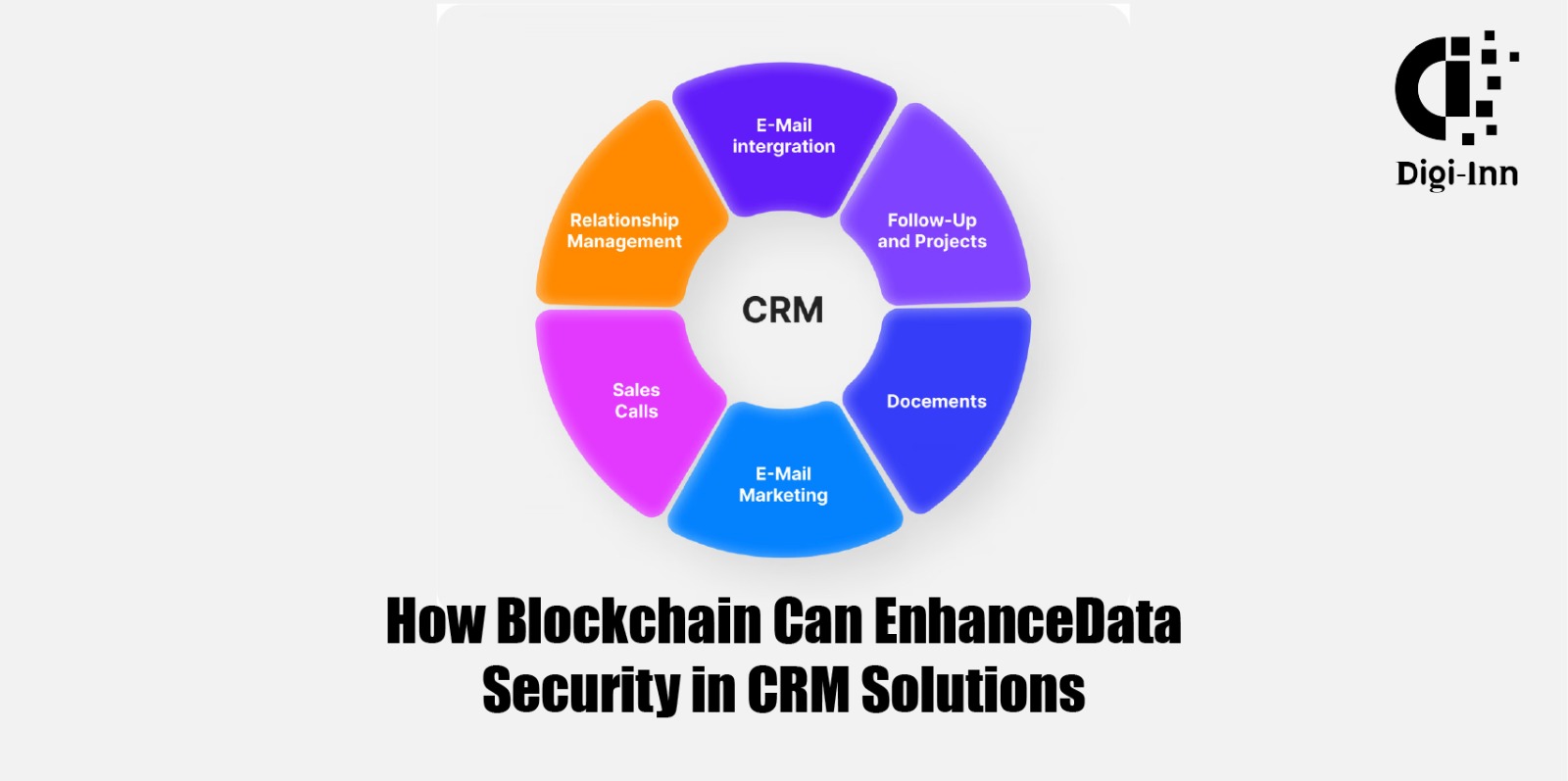
How Blockchain Can Enhance Data Security in CRM Solutions?
While developing a CRM Software it is very important to protect the data of the user that has been entered in it. With the increasing threats in cybersecurity, CRM Software has become the primary target of hackers for security breach, fraud and ungranted access. To overcome this concern blockchain technology provides a transformed approach to enhance data security in CRM Solutions. Blockchain will improve CRM security, ensure data integrity, transparency and compliance.
Blockchain Powered CRM
Basically Blockchain technology is revolutionizing the security of CRM Software. By merging blockchain in CRM software organizations can
Decentralized authentication
Blockchain improves the data security in CRM software because of its decentralized authentications. Previously, the CRM software collected data in a central storage and made it vulnerable. In case hackers access the central database then they can easily enter the whole system. Due to this reason data in old CRM systems was not safe.
By combination of blockchain technology the data entered in CRM software is distributed among several nodes of the network instead of a central database. This finishing of the central database eliminates the chance of security breach. If one node is compromised the other nodes will still remain safe.
Transparency with Immutable Records
One of the biggest benefits of blockchain technology is that it ensures transparency with immutable records. Once the data is entered in a block it cannot be changed or deleted without the agreement of the entire network. This feature is very much important especially in CRM software where data integrity is most important for ensuring correct customer data.
Moreover, the clarity that is offered by blockchain enables businesses to easily navigate and analyze all the alterations in customer data. This ensures accountability and decreases the chance of fraud and scams.
Customer Trust
As the data privacy regulation is rising, it is important for businesses to adopt clear customer consent before collecting and processing personal data. Managing the customer permission in different systems can be difficult. Blockchain technology provides a comprehensive solution for this problem by providing decentralized ledger for recording customer agreement.
In blockchain technology the customer agreement is stored in blockchain offering a clarity, unchangeable records of when and how agreement was given. This makes sure that the businesses are always obedient with company data privacy policy and customers have control over their data.
Eliminating Intermediaries
By removing the intermediaries, businesses can reduce the number of parties that would be involved in managing the customers sensitive data. This greatly lowers the risk of data breach, hacker threats and compliance violations. The encryption mechanism of blockchain ensures that even if unauthorized access has been gained by someone to stored data, still they cannot break it without proper cryptographic keys.
Several CRM software depend on third party services for contract execution such as billing or subscription. Blockchain smart contracts allow businesses to execute predefined agreements without a third party. This ensures secure and tamper proof transactions.
Real World Application of Blockchain in CRM security
Various companies have merged blockchain technology to enhance CRM security. Some real world examples are as follow:-
IBM’s Blockchain CRM Solution:- IBM uses blockchain in their CRM software to improve their data sharing security.
Salesforce Blockchain:- Salesforce integrated blockchain in their CRM system to improve trust and clarity in customer interaction.
Oracle’s Blockchain Integration:- Oracle merged blockchain for ensuring immutable records for compliance.
SAP’s Blockchain-Enabled CRM:- SAP used blockchain in their CRM system to secure supply chain interactions and decrease scam risks.
Microsoft Azure Blockchain:- Microsoft Azure integrated Blockchain technology in their CRM Software for giving smooth CRM security improvement.
Blockchain vs Traditional Encryption
Both blockchain and usual encryption play an important role in data security but there is a difference between blockchain technology and traditional encryption.
Conclusion
Blockchain technology is improving the data security in CRM software by providing decentralized, transparent and tamper-proof solutions. By adopting blockchain integrated CRM solutions businesses can ensure stronger data protection, regulatory compliance and improve customer trust. Ultimately this results in long term success. Also with these advancements we can expect CRM software to transform into highly secure and automated platforms. This minimizes dependency on centralized control while maximizing data protection.
Real Estate ERP System: The Complete Solution for Modern Property Businesses
June 23, 2026, 7:14 a.m.



Leave A Comments