

23Jun
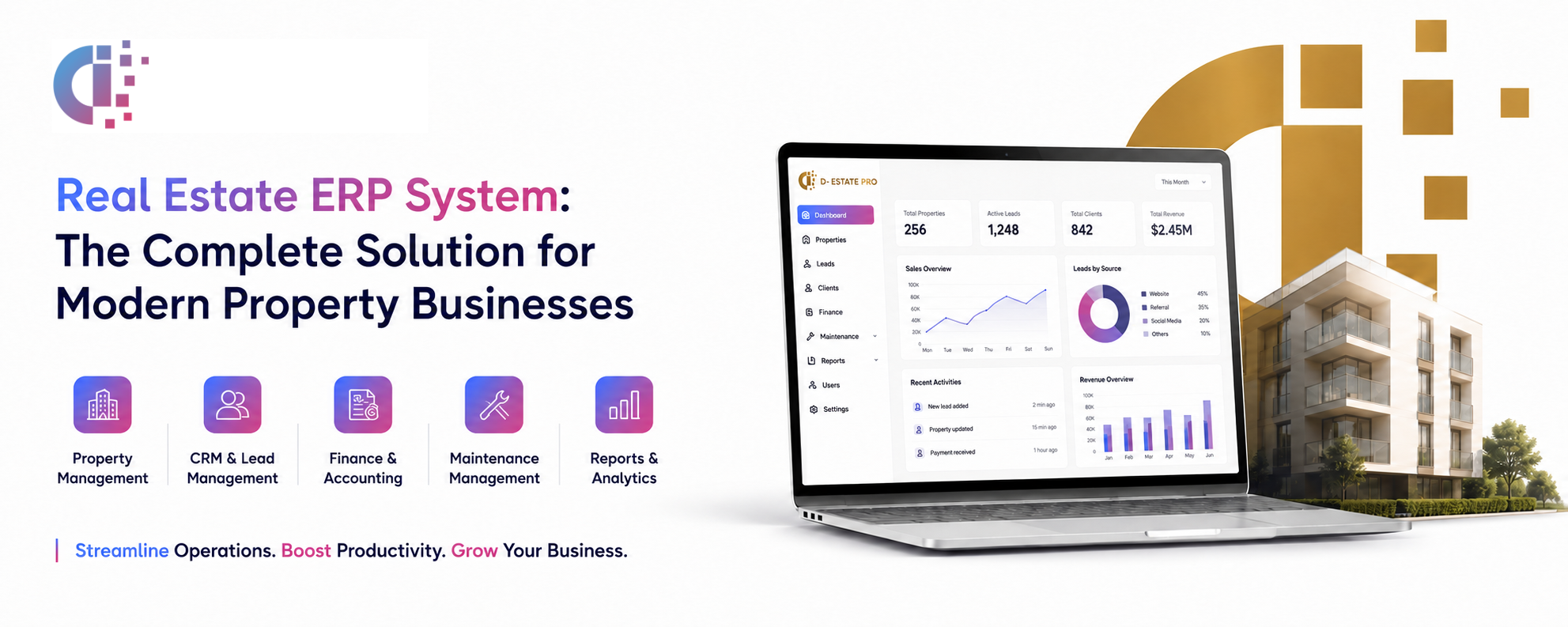
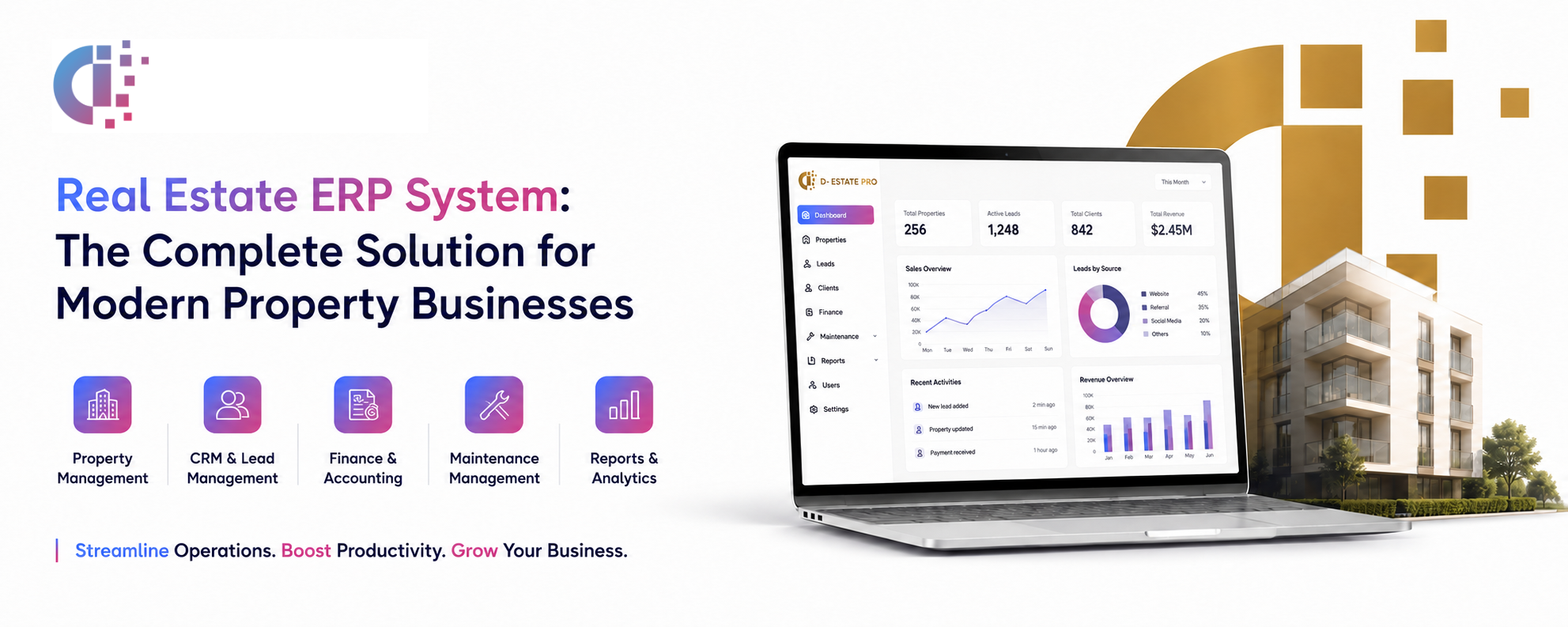
Real Estate ERP System: The Complete Solution for Modern Property Businesses
The real estate industry has evolved beyond spreadsheets, disconnected CRMs, and manual record keeping. Today, developers, housing societies, brokers, and property management companies require a centralized system that connects operations, sales, finance, customer management, and reporting.
That’s where a Real Estate ERP System becomes essential.
If you are searching for the right ERP for real estate business, the ideal solution should go beyond basic lead management and provide complete business visibility from customer inquiry to final possession and post-delivery operations. Modern real estate ERP platforms combine Real Estate CRM, finance, inventory, documentation, and automation into one ecosystem.
What Is a Real Estate ERP System?
A Real Estate ERP (Enterprise Resource Planning) System is a centralized platform built specifically to manage real estate workflows, automate processes, and improve business performance.
Unlike standalone tools, a complete ERP integrates:
- Property Management
- Real Estate CRM
- Finance & Billing
- Inventory Tracking
- Customer Lifecycle Management
- Documentation & Compliance
- HR & Employee Management
- Analytics & Reporting
Platforms designed specifically for real estate combine customer acquisition, property operations, and financial management in one connected workflow.
Why Traditional CRM Is No Longer Enough
Many businesses begin with a CRM for a real estate business, but eventually face limitations.
A CRM manages leads.
An ERP manages the entire business.
| Function | Real Estate CRM | Real Estate ERP |
|---|---|---|
| Lead Tracking | ✓ | ✓ |
| Customer Management | ✓ | ✓ |
| Property Inventory | Limited | ✓ |
| Billing & Installments | — | ✓ |
| Files & Documentation | — | ✓ |
| Society Operations | — | ✓ |
| Finance & Accounting | — | ✓ |
| HR & Team Management | — | ✓ |
For growing real estate businesses, integrating CRM with ERP creates operational efficiency and stronger customer retention.
Modules That Matter in a Modern ERP for Real Estate Business
A successful ERP for real estate business should cover the entire business cycle.
1. Property Management Module
Manage:
- Apartments
- Plots
- Commercial inventory
- Availability tracking
- Ownership records
- Project progress
With centralized control, businesses gain complete visibility into inventory and project performance.
2. Real Estate CRM & Leads Management
An integrated Real Estate CRM helps businesses:
- Capture leads
- Track inquiry history
- Assign sales teams
- Monitor conversion rates
- Manage communication records
- Improve customer engagement
Sales teams can follow prospects from first interaction to booking closure through one unified dashboard.
3. Billing, Installments & Finance Management
Financial control remains one of the biggest challenges in real estate.
Advanced ERP systems support:
Billing Submodules
- Invoice generation
- Installment plans
- Receivable management
- Payment reminders
- Refund tracking
Finance Submodules
- Chart of Accounts
- Revenue monitoring
- Expense management
- Financial reporting
These capabilities reduce manual reconciliation and improve decision-making.
4. Society Management Module
For developers and housing societies, post-delivery operations are equally important.
Society management features include:
- Resident management
- Documentation handling
- Maintenance workflows
- Facility coordination
- Administrative control
This supports efficient long-term property operations after project delivery.
5. Files & Documentation Management
Documentation often slows real estate workflows.
Document management enables:
- Digital property records
- Ownership files
- Approvals & NOCs
- Secure storage
- Version control
This minimizes paperwork while improving accessibility and compliance.
6. Dealers & Client Management
A modern CRM for real estate business should also manage relationships beyond customers.
Key capabilities:
Client Management
- Customer profiles
- Ownership history
- Transaction tracking
- Contract records
Dealer Management
- Commission tracking
- Performance monitoring
- Inventory allocation
This creates transparency across sales channels.
7. HR & Team Management
Operational excellence also depends on internal efficiency.
ERP HR modules support:
- Attendance
- Payroll
- Leave tracking
- Employee records
- Workflow approvals
Integrated HR reduces administrative overhead.
Which ERP Is Suitable for Real Estate?
This is one of the most common questions among developers and property businesses.
The best ERP for real estate business should offer:
- Real Estate CRM
- Property Inventory Management
- Billing & Installments
- Finance Automation
- Society Management
- File Management
- Reporting Dashboard
- Mobile Accessibility
- Multi-Project Support
- Custom Workflows
Solutions built specifically for real estate typically deliver stronger operational alignment than generic ERP platforms.
How Real Estate ERP Creates Business Growth
Businesses that adopt ERP commonly achieve:
- Faster lead conversion
- Reduced manual work
- Better installment recovery
- Stronger financial visibility
- Improved reporting
- Centralized operations
- Higher customer satisfaction
Connected workflows reduce delays and create measurable operational efficiency.
Final Thoughts
The future of real estate belongs to businesses that operate through connected systems, automated workflows, and data-driven decisions.
Whether your organization manages housing societies, commercial projects, apartments, or large-scale developments, adopting a Real Estate ERP System helps centralize operations and scale sustainably.
A complete Real Estate CRM combined with a powerful ERP for real estate business enables companies to manage leads, finances, inventory, documentation, and post-delivery operations all from one platform.
Learn more about DestatePro here: DestatePro – Real Estate ERP Solution


Real Estate ERP System: The Complete Solution for Modern Property Businesses
June 23, 2026, 7:14 a.m.



Leave A Comments