
13Mar
The Role of Blockchain in Software Development
Blockchain technology is changing several industries including software development. As businesses and developers are looking for creative ways to enhance security, transparency, and efficiency, blockchain has come up as a powerful tool. From decentralized applications (dApps) to secure smart contracts and DevOps integrations, blockchain is shaping the future of software development. This blog explores its key roles, benefits, and real-world applications.
Decentralized Applications (dApps) in Modern Software
Rise of dApps in modern Software development
dApps, or decentralized applications, are software programs that run on a blockchain network rather than a centralized server. They combine smart contracts, self-executing agreements with predefined rules, ensuring trust and security without the need for intermediaries. Ethereum, one of the most popular blockchain platforms, has played a significant role in the growth of dApps.
Key Features of dApps
Decentralization: No single entity controls the application, reducing risks of failure and censorship.
Transparency: The underlying code is often open-source, allowing users to verify its functionality.
Security: Blockchain technology makes dApps more resistant to hacks and fraud.
Tokenization: Many dApps use cryptocurrencies or tokens to facilitate transactions and incentivize users.
Why Are dApps Gaining Popularity?
Several factors have contributed to the rise of dApps in modern software:
Enhanced Security and Trust
Since dApps operate on blockchain networks, transactions are immutable and transparent. This makes them more secure compared to traditional applications, which are vulnerable to hacking and data breaches.
Elimination of Intermediaries
Traditional applications often require intermediaries, such as banks or hosting providers. dApps remove these middlemen, reducing costs and increasing efficiency.
Censorship Resistance
Governments or corporations cannot easily shut down dApps, making them ideal for applications that require freedom of speech and financial independence.
Growing Adoption of Blockchain Technology
With the rise of Web3 and the increasing adoption of cryptocurrencies, more developers and businesses are exploring dApps as viable solutions for various industries.
Benefits of dApps Over Traditional Applications
Over the recent years, decentralized applications (dApps) have gained significant attention due to their several benefits over traditional applications.
Decentralization: No Central Authority
One of the biggest advantages of dApps is decentralization. Traditional applications are controlled by a central entity, meaning they can restrict access, manipulate data, or even shut down services at any time. dApps, on the other hand, operate on a blockchain network, distributing data across multiple nodes. This makes them resistant to censorship, fraud, and single points of failure.
Enhanced Security and Privacy
Security is a major concern in traditional applications, as centralized servers are prime targets for hackers. Since dApps leverage blockchain technology, they use cryptographic security measures that make data tampering nearly impossible. Additionally, dApps often do not require users to provide personal information, reducing the risk of data breaches and identity theft.
Transparency and Trust
Blockchain technology enables transparency in dApps because all transactions and operations are recorded on a public ledger. This ensures that users can verify the integrity of the system, unlike traditional applications where data and algorithms are controlled by a central authority. This level of transparency builds trust among users and eliminates the need for intermediaries.
Lower Costs and No Middlemen
Traditional applications often involve middlemen, such as banks, payment processors, or cloud service providers, which can lead to additional costs for users. dApps eliminate the need for intermediaries by enabling peer-to-peer transactions through smart contracts. This reduces transaction fees and operational costs, making services more affordable for users.
Uninterrupted Service Availability
Since dApps run on decentralized networks, they are not dependent on a single server or entity to remain operational. This means they are highly resistant to downtime and cyber-attacks. Traditional applications, however, can experience outages due to server failures or targeted attacks, making them less reliable in comparison.
Ownership and Control for Users
With traditional applications, users often rely on companies to manage their data, which can be exploited, sold, or lost. dApps provide users with more control over their data, as they operate on blockchain-based identity solutions where users own their private keys. This ensures that personal information remains in the hands of the users rather than third parties.
Cross-Border Access and Inclusivity
Many traditional applications face geographical restrictions due to regulations, payment limitations, or company policies. dApps, however, are accessible to anyone with an internet connection, enabling global participation without barriers. This inclusivity makes dApps a powerful tool for financial inclusion and borderless services.
Developing Scalable dApps: Challenges & Solutions
As dApps have been widely adopted, developers face significant challenges in building dApps that can scale effectively.
Challenges in Developing Scalable dApps
Network Congestion
Public blockchains, such as Ethereum, have limited transaction throughput, leading to congestion and high gas fees during peak usage. This slows down transactions and affects user experience.
High Gas Fees
Transaction fees on blockchain networks can become prohibitively expensive as network activity increases. This is a major barrier to scalability, especially for applications requiring frequent transactions.
Latency Issues
Consensus mechanisms like Proof of Work (PoW) and even Proof of Stake (PoS) introduce delays in transaction finality, leading to slow response times for dApps.
Storage Limitations
Every transaction on a blockchain is recorded permanently, leading to exponential growth in data storage requirements. This can slow down network performance and increase costs.
Interoperability
Most dApps are built on a single blockchain, making it difficult to interact seamlessly with other blockchain networks. This limits functionality and potential user adoption.
Solutions to Improve Scalability
Layer 2 Scaling Solutions
Layer 2 solutions like Optimistic Rollups, zk-Rollups, and state channels process transactions off-chain while securing them on the main blockchain. This reduces congestion and lowers gas fees.
Sharding
Sharding divides the blockchain into smaller, manageable parts (shards) that process transactions independently. This allows parallel processing, increasing network capacity.
Sidechains
Sidechains operate independently from the main blockchain but remain connected to it. They enable faster transactions and reduce the load on the main network.
Optimized Smart Contracts
Developers can optimize smart contract code to reduce computational complexity and minimize gas fees. Using efficient algorithms and batching transactions can improve performance.
Interoperability Protocols
Cross-chain communication solutions like Polkadot, Cosmos, and bridges allow dApps to interact with multiple blockchains, increasing flexibility and user adoption.
Security Improvement through Blockchain
As the danger of the cyber threat is increasing time by time, the safety of software and its data is the most important task. To overcome this concern blockchain has greatly improved software security.
How Blockchain Improves Software Security?
Blockchain has improved software security through:-
Decentralization Reduces Single Points of Failure
Traditional security models rely on centralized systems, making them vulnerable to hacking. If a central server is compromised, the entire system can be at risk. Blockchain, on the other hand, distributes data across multiple nodes, reducing the risk of a single point of failure. Even if one node is attacked, the rest of the network remains secure.
Immutability Prevents Data Tampering
Once data is recorded on a blockchain, it cannot be altered or deleted without consensus from the network. This immutability makes blockchain an excellent tool for preventing unauthorized modifications to software code, transaction records, and sensitive information.
Enhanced Authentication with Cryptographic Security
Blockchain uses advanced cryptographic techniques to secure data. Each transaction or data entry is encrypted and linked to the previous one using a cryptographic hash. This makes it nearly impossible for attackers to alter data without detection. Additionally, blockchain-based authentication eliminates the need for passwords, reducing the risk of credential theft.
Smart Contracts Automate Security Measures
Smart contracts are self-executing agreements stored on the blockchain. They automatically enforce security protocols without the need for human intervention. For example, smart contracts can ensure that only authorized users access certain software functions, reducing vulnerabilities due to human error.
Protection Against DDoS Attacks
Distributed Denial-of-Service (DDoS) attacks overwhelm servers with excessive traffic, causing system failures. Blockchain’s decentralized nature makes it difficult for attackers to target a single point of entry, reducing the effectiveness of such attacks.
Secure Software Updates and Patch Management
One common security risk in software is unverified updates that may introduce vulnerabilities. Blockchain ensures that only authorized and verified updates are deployed by tracking changes in a transparent and tamper-proof ledger.
Blockchain for DevOps
Blockchain, known for its decentralized and tamper-proof nature, can significantly enhance security and transparency in CI/CD pipelines.
Why Use Blockchain in CI/CD Pipelines?
Traditional CI/CD systems rely on centralized tools, which makes them vulnerable to security risks like unauthorized access, data tampering, and supply chain attacks. Blockchain can address these issues by:
Ensuring Code Integrity: Every code commit can be stored as a blockchain transaction, ensuring an immutable record of changes.
Enhancing Security: Decentralization reduces the risk of a single point of failure.
Improving Transparency: Every stakeholder can verify changes in real-time.
Tracking Dependencies: Securely tracking third-party dependencies can prevent vulnerabilities.
How Blockchain Enhances CI/CD Pipelines?
Immutable Code Audits
Every commit and build process can be recorded on a blockchain ledger. This ensures that no unauthorized changes go unnoticed. Developers can verify the integrity of the code at every stage.
Decentralized Verification
Smart contracts can automate verification processes. Before a build is deployed, a blockchain-based smart contract can validate signatures, dependencies, and compliance policies, reducing human error and improving security.
Secure Artifact Storage
Blockchain can be used to track software artifacts (e.g., compiled binaries, container images). Hashing these artifacts on a blockchain ensures they have not been tampered with after compilation.
Transparent Deployment History
Blockchain enables a secure and tamper-proof deployment history. Teams can trace back any deployment and verify who made changes, when, and why.
Access Control and Authentication
Instead of relying on traditional centralized authentication systems, blockchain-based identity management ensures only authorized users can trigger builds and deployments.
Challenges of Integrating Blockchain in CI/CD
While blockchain provides many advantages, there are challenges to consider:
Performance Overhead: Blockchain transactions can add latency to CI/CD workflows.
Complex Implementation: Not all CI/CD tools natively support blockchain integration.
Storage Costs: Storing large artifacts on-chain is impractical; hybrid approaches (e.g., IPFS + Blockchain) are needed.
Conclusion
Blockchain is transforming software development by enhancing security, transparency, and efficiency across various domains. From decentralized applications to AI integration and DevOps security, the potential applications are limitless. As the technology matures, developers and businesses must embrace blockchain to stay ahead in the evolving digital landscape.


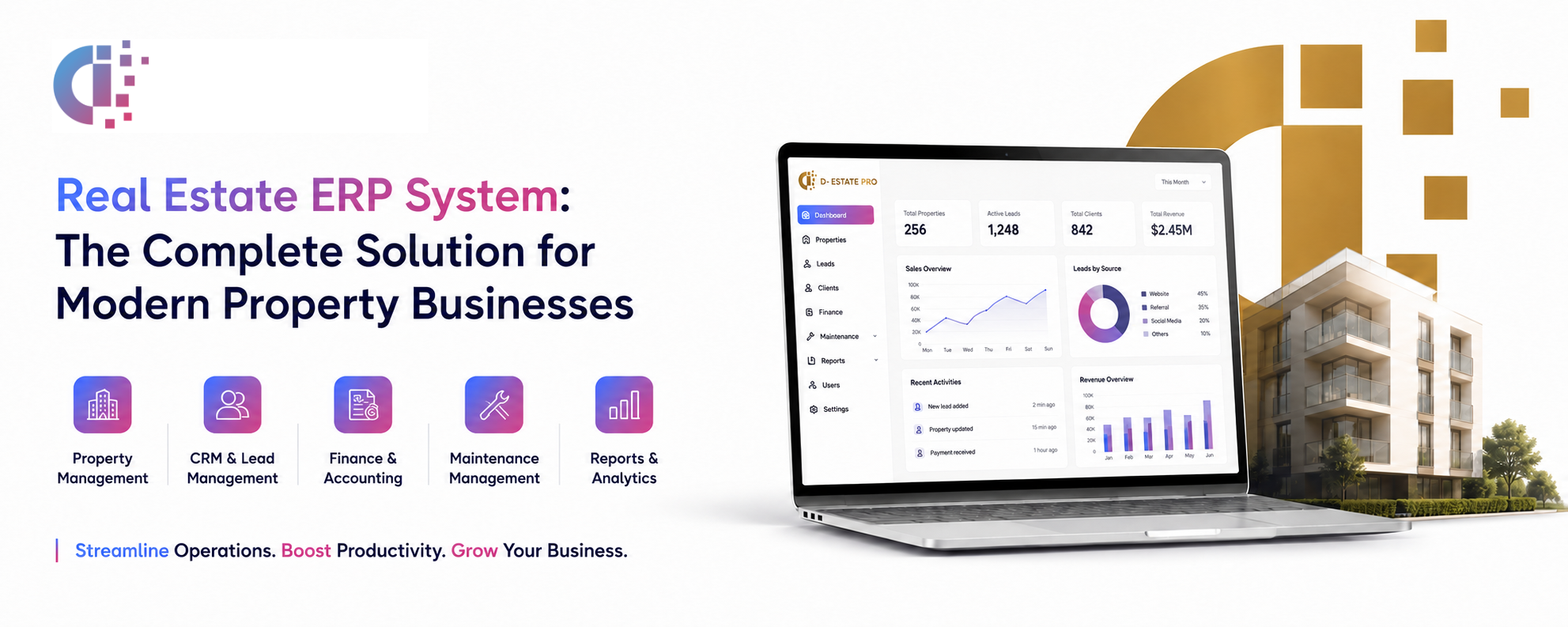
Real Estate ERP System: The Complete Solution for Modern Property Businesses
June 23, 2026, 7:14 a.m.



Leave A Comments