

20Aug
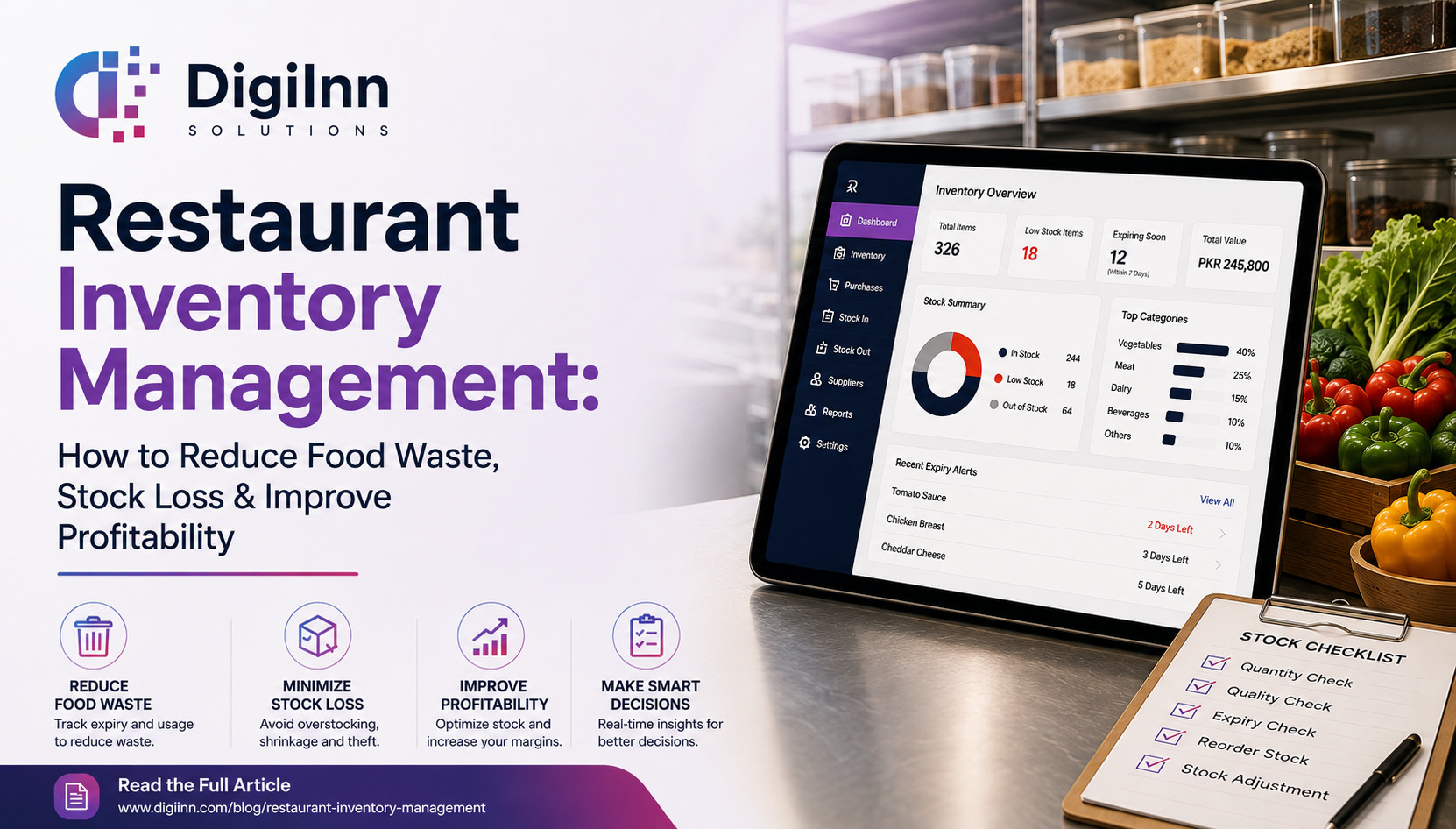
Restaurant Inventory Management: How to Reduce Food Waste, Stock Loss & Improve Profitability
Running a successful restaurant is not only about serving great food. Behind every profitable restaurant is a well-managed inventory system that controls ingredients, purchasing, stock levels, food waste, and operating costs.
When inventory is poorly managed, restaurants can lose money through expired ingredients, over-ordering, stock shortages, inaccurate portions, untracked waste, and stock discrepancies.
This is why restaurant inventory management has become an essential part of modern restaurant operations.
With the right restaurant inventory management software, restaurant owners can gain real-time visibility into stock, improve purchasing decisions, control food costs, reduce waste, and protect their profit margins.
In this guide, we'll explore how restaurant inventory management works, why it matters, the common causes of inventory loss, and how an integrated restaurant ERP and POS system like Restiko can help restaurants manage their operations more efficiently.
What Is Restaurant Inventory Management?
Restaurant inventory management is the process of tracking the ingredients, beverages, packaging, supplies, and other products a restaurant purchases, stores, uses, sells, and wastes.
A proper inventory management system helps restaurant owners answer important questions such as:
How much stock do we currently have?
Which ingredients are running low?
What products are being wasted?
How much are we spending on ingredients?
Which items are being used most frequently?
When should we reorder?
Where are inventory discrepancies occurring?
How much does each menu item actually cost?
For restaurants, inventory management goes beyond simply counting products.
It connects purchasing, stock management, kitchen operations, POS sales, food costing, and reporting to provide a clearer picture of how inventory affects profitability.
Why Is Inventory Management Important for Restaurants?
Inventory is one of the most important controllable costs in a restaurant.
Poor inventory practices can result in:
Food spoilage
Overstocking
Stock shortages
Unnecessary purchasing
Food waste
Inventory discrepancies
Poor portion control
Higher food costs
Lost sales
Current restaurant inventory guidance emphasizes connecting purchasing, recipe costing, waste tracking, stock counts, sales data, and reporting so operators can understand where inventory is being consumed and where losses occur.
For restaurants operating in competitive markets, even small operational inefficiencies can gradually reduce margins.
That makes restaurant stock management a business priority, not simply an administrative task.
The Hidden Cost of Poor Restaurant Inventory Management
Restaurant inventory losses don't always appear as one large expense.
They often happen gradually.
For example:
A restaurant purchases too many fresh ingredients.
Some ingredients aren't used before their expiry date.
Other ingredients are over-portioned.
Some stock is wasted during preparation.
A few items run out during peak hours.
The restaurant then makes emergency purchases at higher prices.
Individually, these problems may appear small.
Together, they can significantly affect profitability.
Research conducted in Lahore found measurable food waste within restaurants and identified customer leftovers and inaccurate demand forecasting among important contributors to food waste.
This is why restaurants need visibility into what they purchase, what they use, what they sell, and what they waste.
7 Common Restaurant Inventory Problems
1. Over-Ordering
Ordering more stock than necessary can tie up cash and increase the risk of spoilage.
This is particularly problematic for restaurants dealing with:
Fresh vegetables
Meat
Dairy products
Fruits
Prepared ingredients
Short-shelf-life products
Better inventory data helps restaurants make purchasing decisions based on actual consumption instead of guesswork.
2. Stock Shortages
Running out of an important ingredient during service can be just as damaging as overstocking.
Imagine a customer orders your best-selling dish, only to discover that the kitchen has run out of one of its main ingredients.
The result can be:
Cancelled orders
Customer dissatisfaction
Lost sales
Poor reviews
Reduced repeat business
A modern restaurant inventory system can help teams monitor stock levels and identify items that require replenishment.
3. Food Waste and Spoilage
Food waste is one of the biggest challenges in restaurant operations.
Waste can occur through:
Expired ingredients
Over-preparation
Incorrect portioning
Preparation mistakes
Damaged products
Customer returns
Excess production
Poor storage
Tracking waste is important because restaurants cannot improve what they do not measure.
A proper food inventory management system can help identify recurring waste patterns and give managers better visibility into inventory movement.
4. Manual Inventory Tracking
Many restaurants still depend on:
Paper records
Spreadsheets
Manual stock counts
Separate purchase records
Disconnected POS systems
These methods can work at a very small scale, but they become increasingly difficult as order volume and operational complexity grow.
Manual systems also make it harder to obtain real-time information.
A modern restaurant inventory management software solution can centralize this information and reduce repetitive manual work.
5. Poor Food Cost Visibility
Restaurant owners need to understand how much their ingredients actually cost.
For example, if the price of chicken, cooking oil, cheese, or other ingredients changes, the cost of preparing a menu item can also change.
Without accurate food costing, restaurants may continue selling dishes at prices that no longer provide the expected margin.
This is why food cost management and inventory management should work together.
6. Inventory Discrepancies
Sometimes the stock recorded in the system does not match the physical stock in storage.
This can happen because of:
Incorrect entries
Waste
Spoilage
Portion variations
Unrecorded usage
Damaged products
Theft or shrinkage
Regular inventory counts and variance reporting can help restaurant managers identify these discrepancies earlier.
7. Lack of Multi-Branch Visibility
Managing one restaurant is different from managing five, ten, or fifty locations.
Multi-branch restaurant chains need visibility into:
Branch-wise stock
Purchases
Sales
Consumption
Transfers
Inventory value
Supplier activity
A centralized restaurant ERP system can make it easier to manage multiple locations through one connected platform.
How Restaurant Inventory Management Software Reduces Food Waste
Technology can make inventory management more systematic.
Instead of discovering a problem after stock has already been wasted, restaurant owners can use operational data to identify potential problems earlier.
Real-Time Stock Visibility
A centralized inventory system allows managers to see current stock levels and monitor inventory movement.
Better Purchasing Decisions
Historical sales and consumption data can help restaurants make more informed purchasing decisions.
Low-Stock Monitoring
Low-stock notifications can help prevent important ingredients from running out during service.
Waste Tracking
Recording inventory waste makes it easier to understand where losses are occurring.
Better Food Cost Control
Connecting inventory data with menu and sales information provides better visibility into food costs.
Centralized Reporting
Managers can use reports to identify trends, discrepancies, and operational inefficiencies.
These are among the core capabilities restaurant operators increasingly look for when evaluating inventory software.
Why POS and Inventory Management Should Work Together
A restaurant POS system tells you what has been sold.
An inventory system tells you what stock is available.
When the two systems are connected, restaurant operations become much more powerful.
Consider a simple workflow:
Customer places an order → POS records the sale → Kitchen receives the order → Ingredients are consumed → Inventory is updated → Management receives sales and stock information.
This creates a connected operational cycle.
Instead of maintaining separate records for sales and inventory, restaurants can bring the information together.
POS + Inventory Integration Can Help Restaurants:
Reduce manual data entry
Improve stock visibility
Monitor ingredient consumption
Improve purchasing decisions
Track sales alongside inventory
Identify discrepancies
Improve operational reporting
For growing restaurants, this integration is especially valuable because disconnected systems can create information gaps.
5 Practical Ways to Reduce Restaurant Food Waste
Technology is important, but inventory control also requires good operational practices.
1. Track What Gets Wasted
Don't simply throw away unused food.
Record the reason.
Was it:
Spoilage?
Overproduction?
Preparation error?
Customer return?
5. Analyze Sales and Consumption
Your sales data can tell you more than just revenue.
It can help you understand:
Which products sell most
Which ingredients are consumed most
Which items are slow-moving
When demand increases
When purchasing needs to change
This is where integrated restaurant analytics become valuable.
How Restiko Helps Restaurants Manage Inventory
Restiko is a Restaurant ERP with POS designed to connect restaurant operations through a centralized platform.
Instead of managing billing, kitchen operations, inventory, and reporting through separate systems, restaurants can bring these workflows together.
Restiko helps restaurants manage:
Smart POS
Inventory Management
Kitchen Management
Order Management
Purchase Management
Warehouse Management
Customer Management
Accounts & Finance
Reports & Analytics
Multi-branch Operations
This connected approach allows restaurant owners and managers to gain greater visibility into their operations.
Manage Stock More Efficiently
With centralized inventory management, restaurant teams can maintain better visibility over stock and purchasing activities.
This helps reduce reliance on spreadsheets and disconnected records.
Connect Inventory With Restaurant Operations
When inventory is connected to restaurant sales and operations, managers can make decisions using operational data rather than relying entirely on manual calculations.
Monitor Restaurant Performance
Restiko's reporting and analytics capabilities can help management understand sales and operational performance from a centralized system.
This can support better decisions around purchasing, stock management, and restaurant growth.
Manage Multiple Locations
For restaurant groups and food chains, centralized management becomes increasingly important.
Restiko is designed to support restaurants that want to manage operations across locations while maintaining greater visibility and control.
Restaurant Inventory Management: Manual vs. Automated
The goal isn't simply to replace paper with software.
The goal is to create a connected restaurant operation where sales, kitchen activity, inventory, purchasing, and reporting work together.
How to Choose the Best Restaurant Inventory Management Software
When evaluating restaurant inventory management software, look beyond basic stock counting.
Consider whether the system offers:
POS Integration
Can inventory work together with your sales and billing system?
Real-Time Visibility
Can managers see current stock information?
Purchase Management
Can the restaurant manage purchasing activities efficiently?
Waste Monitoring
Can teams identify and analyze inventory waste?
Reporting & Analytics
Can management understand inventory and business performance?
Multi-Branch Support
Can the platform scale with your restaurant chain?
Ease of Use
Can restaurant staff actually use the system efficiently during busy operations?
An integrated restaurant ERP can be particularly valuable for growing businesses because it connects multiple operational functions instead of creating another isolated software system.
Why Restaurant Inventory Management Is a Profitability Strategy
Inventory management is not just about knowing how many boxes, bottles, or kilograms are sitting in your storage area.
It is about understanding how inventory affects your entire restaurant business.
Better inventory management can help restaurants:
Reduce unnecessary waste
Control food costs
Avoid stock shortages
Improve purchasing decisions
Identify inventory discrepancies
Improve operational efficiency
Protect profit margins
Scale restaurant operations more effectively
The restaurants that manage inventory effectively are not simply controlling stock.
They are controlling one of the most important parts of their business economics.
Final Thoughts
A restaurant can have excellent food, strong branding, and a loyal customer base — but poor inventory management can still reduce profitability.
From food waste and spoilage to stock shortages and purchasing inefficiencies, small inventory problems can accumulate into high operational costs.
The solution is not simply counting inventory more often.
Restaurants need connected inventory management that works alongside POS, kitchen operations, purchasing, and business analytics.
With an integrated restaurant ERP and POS system like Restiko, restaurants can move away from disconnected processes and gain better control over their operations.
Better inventory visibility.
Less operational guesswork.
Smarter purchasing.
Better control over food costs.
Stronger restaurant operations.
Ready to take control of your restaurant inventory?
Book a Restiko demo and discover how an integrated Restaurant ERP with POS can help your business operate smarter.
FAQs
What is restaurant inventory management?
Restaurant inventory management is the process of tracking ingredients, beverages, supplies, purchases, usage, waste, and stock levels to help a restaurant control costs and operate efficiently.
What is restaurant inventory management software?
Restaurant inventory management software is a digital system that helps restaurants monitor stock, manage purchases, track inventory movement, analyze usage, and improve operational visibility.
How can restaurants reduce food waste?
Restaurants can reduce food waste by tracking waste, improving purchasing decisions, monitoring expiry dates, using FIFO practices, standardizing portions, and analyzing ingredient consumption.
Why should a restaurant POS be connected to inventory?
Connecting POS and inventory allows restaurant management to compare sales with stock movement and reduce manual data entry. It can provide better visibility into what is being sold and how inventory is being consumed.
What is the difference between POS and restaurant ERP?
A POS primarily manages sales, orders, and billing. A restaurant ERP connects broader business functions such as POS, inventory, kitchen management, purchasing, finance, customer management, and reporting within one system.
Is restaurant inventory software useful for multi-branch restaurants?
Yes. Multi-location restaurants can benefit from centralized inventory visibility, branch-level reporting, purchasing control, and standardized operational processes.
How does inventory management improve restaurant profitability?
Better inventory management can reduce waste, improve purchasing decisions, minimize stock shortages, improve food-cost visibility, and help restaurants make more informed operational decisions.Damaged stock?
Once waste is categorized, managers can identify recurring patterns.
2. Use FIFO
FIFO stands for First In, First Out.
The basic principle is simple:
Use older stock before newer stock.
This can help reduce spoilage, particularly for perishable ingredients.
3. Monitor Stock Levels
Know what you have before placing another purchase order.
Over-ordering can increase waste, while under-ordering can create stockouts.
The goal is controlled inventory based on actual restaurant demand.
4. Standardize Portions
Inconsistent portions can increase food costs.
Recipe standards and portion controls can help restaurants maintain consistency while improving cost visibility.


Beyond Digital: How AI and Automation Are Redefining Business Transformation
Aug. 28, 2026, 2:16 p.m.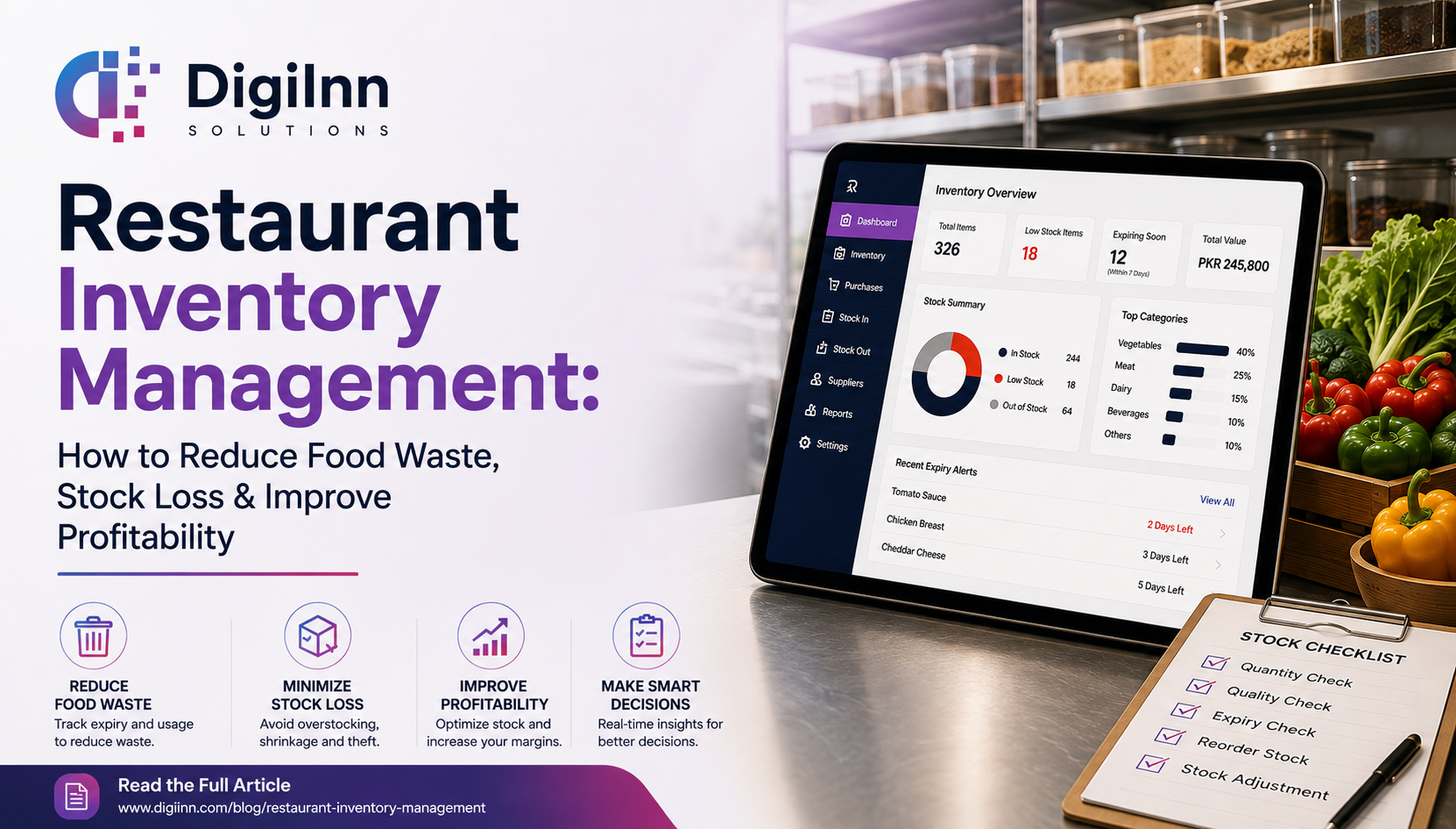
Restaurant Inventory Management: How to Reduce Food Waste, Stock Loss & Improve Profitability
Aug. 20, 2026, 10:48 a.m.



Leave A Comments