

27Jul
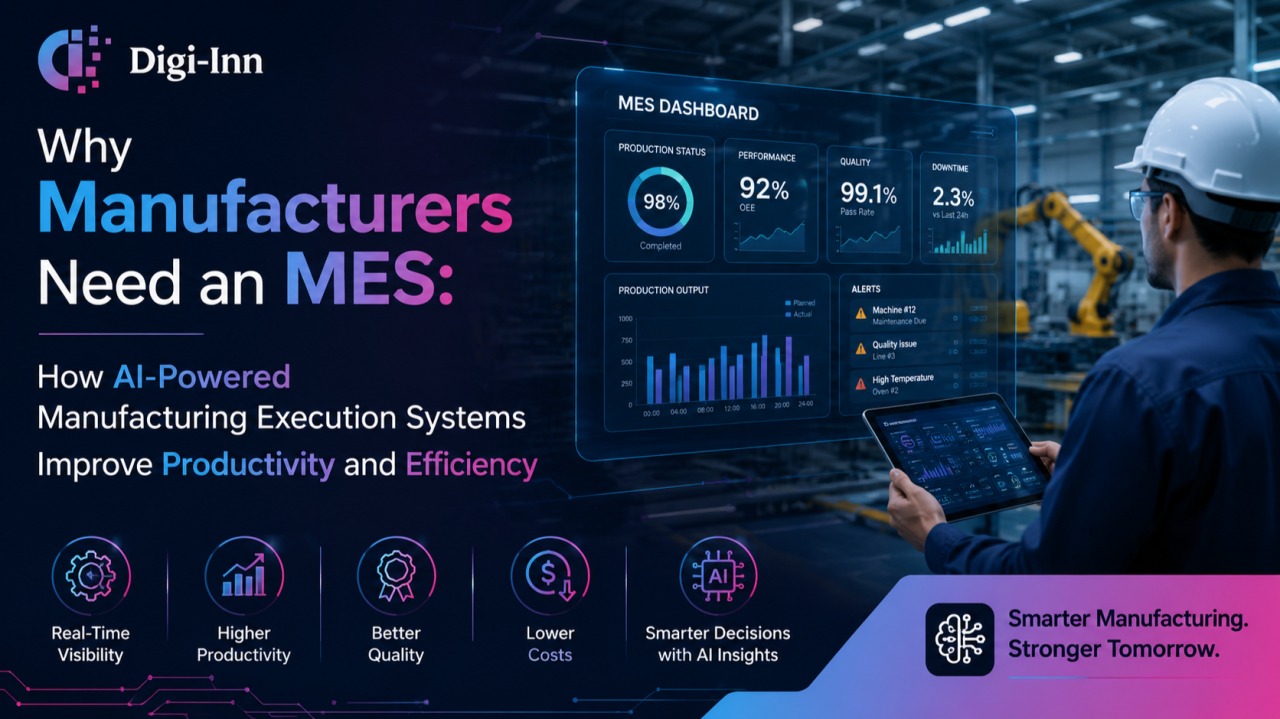
Why Manufacturers Need an AI-Powered Manufacturing Execution System
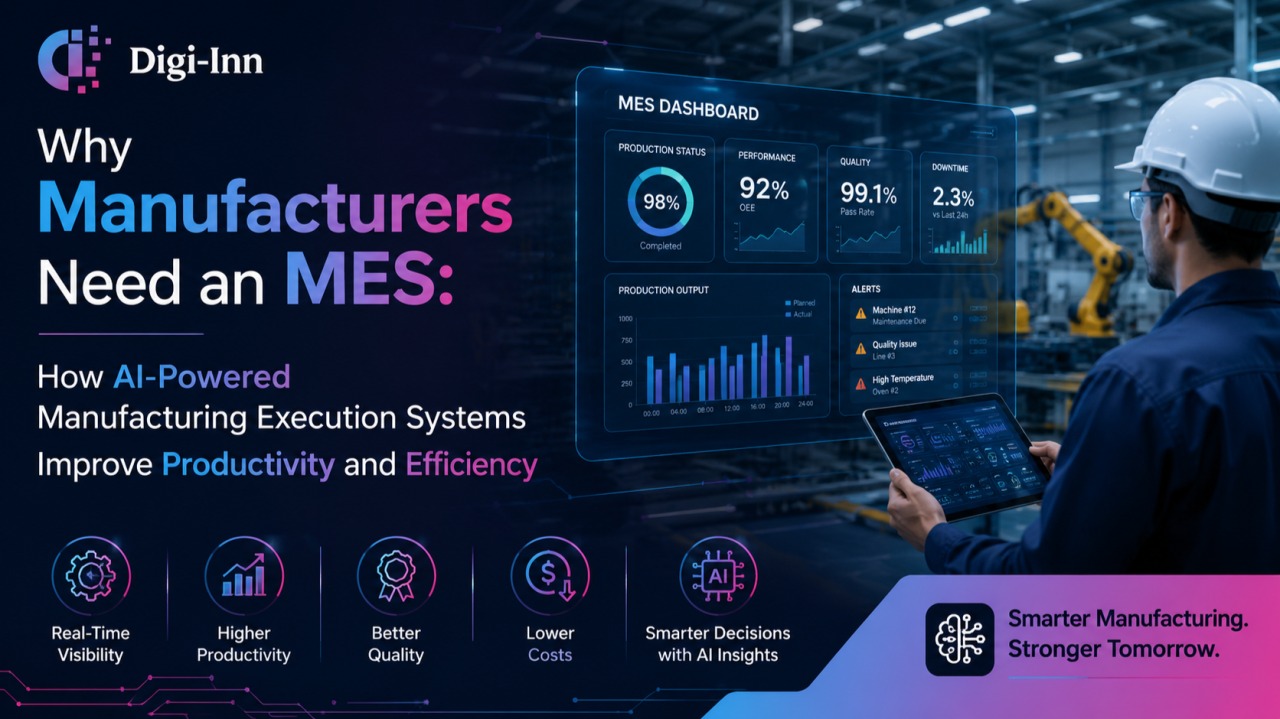
Why Manufacturers Need an MES: How AI-Powered Manufacturing Execution Systems Improve Productivity and Efficiency
The manufacturing industry is evolving faster than ever. Rising customer expectations, increasing operational costs, supply chain disruptions, and the demand for higher product quality are pushing manufacturers to rethink how they operate.
Yet many factories still rely on spreadsheets, manual reporting, and disconnected systems to manage production. While these methods may have worked in the past, they often result in delays, inconsistent quality, limited visibility, and costly inefficiencies.
This is where a Manufacturing Execution System (MES) becomes a game changer.
What Is a Manufacturing Execution System (MES)?
A Manufacturing Execution System (MES) is software that connects the shop floor with business operations. It provides real-time visibility into production, enabling manufacturers to monitor, control, and optimize every stage of the manufacturing process.
Unlike traditional manual processes, an MES captures live production data directly from machines, operators, and workstations, giving decision-makers accurate information when they need it most.
The Challenges of Manufacturing Without an MES
Many manufacturers experience common operational challenges, including:
· Manual production tracking that consumes valuable time
· Limited visibility into work-in-progress
· Inventory discrepancies and material shortages
· Unexpected machine downtime
· Quality issues detected too late
· Delayed reporting and slow decision-making
· Lack of production traceability for compliance
These challenges don't just reduce productivity they directly impact profitability, customer satisfaction, and long-term business growth.
How an MES Improves Manufacturing Operations
Implementing an MES transforms manufacturing by providing complete visibility across the production floor.
Real-Time Production Monitoring
Monitor every production line as it happens. Managers gain instant insights into machine status, production progress, operator performance, and bottlenecks without waiting for end-of-day reports.
Improved Quality Control
Quality inspections become integrated into the production process, allowing issues to be detected early rather than after products are completed.
This reduces scrap, minimizes rework, and helps maintain consistent product quality.
Inventory and Material Tracking
Track raw materials, work-in-progress, and finished goods in real time.
Manufacturers can reduce inventory errors, improve material planning, and eliminate unnecessary stock shortages.
Complete Production Traceability
Every product can be traced from raw material to final shipment.
This is especially valuable for industries requiring regulatory compliance, audits, and detailed production history.
Better Machine Utilization
Monitor equipment performance continuously to identify downtime, maintenance requirements, and production inefficiencies before they become costly problems.
Taking Manufacturing Further with AI
While MES provides operational visibility, Artificial Intelligence (AI) transforms that visibility into actionable intelligence.
Instead of simply showing what happened, AI helps manufacturers understand why it happened and predicts what will happen next.
Predictive Maintenance
AI analyzes machine performance data to identify early warning signs of equipment failure.
This allows maintenance teams to resolve issues before breakdowns occur, reducing downtime and extending equipment life.
Intelligent Production Planning
AI can optimize production schedules by considering demand forecasts, machine availability, labor capacity, and material constraints.
The result is improved production efficiency and shorter lead times.
Automated Reporting
Rather than spending hours preparing production reports, AI automatically generates dashboards, KPIs, and management insights in real time.
This enables faster and more informed business decisions.
Demand Forecasting
By analyzing historical sales, seasonal trends, and market data, AI helps manufacturers forecast future demand with greater accuracy.
This improves inventory planning and reduces overproduction.
Process Optimization
AI continuously analyzes production data to identify hidden inefficiencies, bottlenecks, and opportunities for process improvement.
Over time, manufacturers can increase throughput while lowering operational costs.
Why Custom MES Solutions Deliver Better Results
Every manufacturing business operates differently.
Production workflows, approval processes, machinery, quality standards, and reporting requirements vary significantly across industries.
This is why many manufacturers outgrow generic software solutions.
A custom-built MES is designed around your existing operations instead of forcing your business to adapt to software limitations.
Custom solutions can seamlessly integrate with:
· ERP systems
· Accounting software
· Warehouse Management Systems (WMS)
· CRM platforms
· IoT sensors and industrial equipment
· AI and business intelligence platforms
The result is one connected ecosystem that improves collaboration, visibility, and operational efficiency.
The Future of Smart Manufacturing
Industry 4.0 is no longer a future concept it's today's competitive advantage.
Manufacturers that embrace digital transformation are achieving:
· Higher production efficiency
· Better product quality
· Lower operating costs
· Faster decision-making
· Greater customer satisfaction
· Improved scalability for future growth
An AI-powered MES serves as the foundation for this transformation, enabling manufacturers to become more agile, data-driven, and competitive.
Conclusion
Manufacturing success today depends on visibility, automation, and intelligent decision-making.
A Manufacturing Execution System (MES) provides the real-time operational control manufacturers need, while Artificial Intelligence unlocks predictive insights that drive continuous improvement.
Together, MES and AI create a smarter, more efficient factory one that minimizes downtime, improves quality, optimizes resources, and supports sustainable business growth.
At Digi-Inn Solutions, we develop custom MES, MIS, and AI-powered manufacturing solutions tailored to each organization's unique processes. From production monitoring and workflow automation to ERP integration and interactive analytics, we help manufacturers build technology that works the way their factory works.
Is your manufacturing operation ready for the next stage of digital transformation? Let's build a smarter factory together.

Beyond Digital: How AI and Automation Are Redefining Business Transformation
Aug. 28, 2026, 2:16 p.m.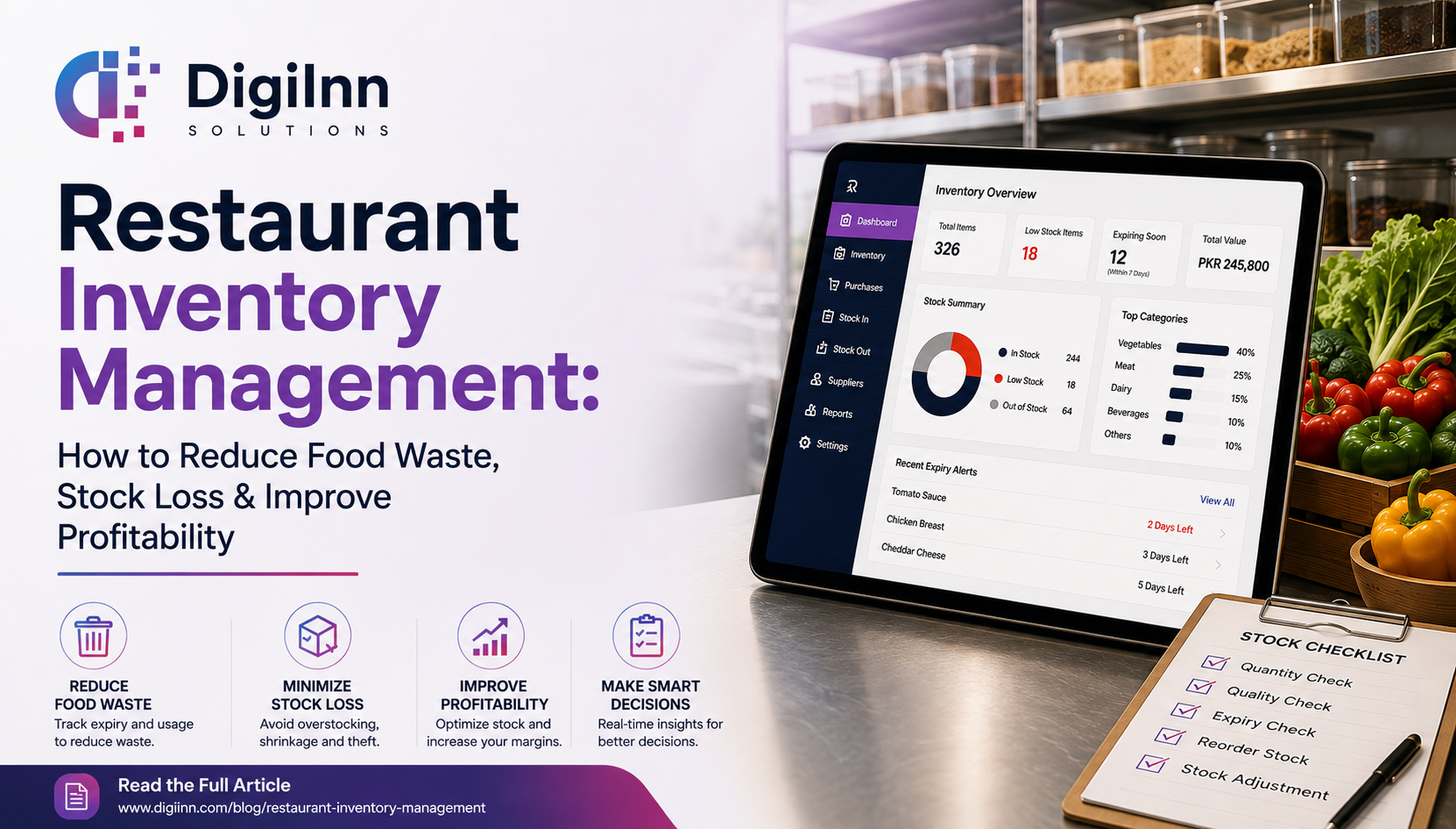
Restaurant Inventory Management: How to Reduce Food Waste, Stock Loss & Improve Profitability
Aug. 20, 2026, 10:48 a.m.




Leave A Comments