
23Oct
How Does a Business Application Work? A Complete Guide to Custom App Development and Business Automation in 2026
Discover how custom business applications connect customers, automate workflows, improve team coordination, and help companies manage operations more efficiently.
Businesses today are expected to respond faster, operate efficiently, and deliver seamless digital experiences. Yet many organizations still manage important processes through spreadsheets, disconnected software, emails, and manual communication.
As operations grow, these disconnected systems can create delays, duplicate work, and limited visibility into business performance.
This is where custom business application development becomes valuable.
A well-designed business application does more than provide a digital interface. It connects customers, employees, processes, and business information within a structured system.
Whether you're managing a restaurant, healthcare facility, real estate company, educational institution, retail business, or enterprise operation, a custom mobile or web application can simplify the way your business works.
What Is a Business Application?
A business application is a software solution designed to help an organization manage specific activities, deliver services, or automate daily operations.
Applications can be developed for smartphones, tablets, web browsers, or internal business systems.
Common examples include:
Customer applications: Online ordering, appointment booking, service requests, and customer portals.
Employee applications: Task management, attendance, internal communication, and field operations.
Management applications: Business dashboards, reporting, approvals, and performance monitoring.
Enterprise applications: Connected systems for finance, inventory, customer management, and operational workflows.
Unlike generic software, custom business applications can be designed around a company's processes, requirements, and growth plans.
How Does an Application Work for Your Business?
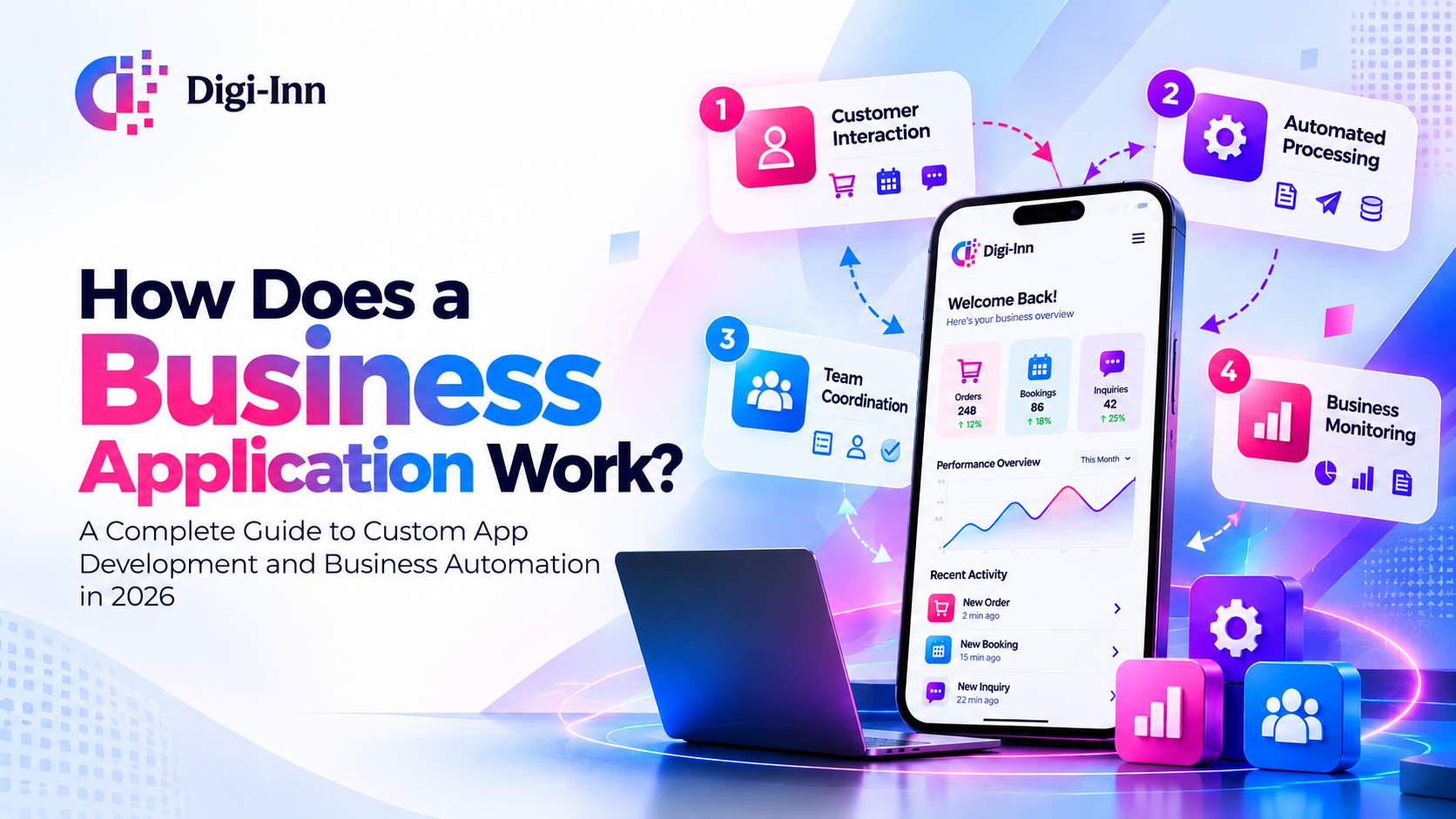
A business application typically connects four essential operational stages.
1. Customer Interaction: Make Your Business More Accessible
The customer journey begins when someone interacts with your business through a mobile or web application.
Depending on the business, customers can:
Browse products or services.
Submit inquiries.
Book appointments.
Place orders.
Track requests.
Access account information.
Instead of relying entirely on calls or manual messaging, customers can complete common activities through a convenient digital platform.
Business benefit: Improved accessibility, organized customer requests, and a more consistent digital experience.
2. Automated Processing: Reduce Manual Work
Once a customer submits a request, the application can automatically record the information and trigger the next step.
For example, when a customer books an appointment, the system can register the booking, update availability, and notify the relevant team.
With business process automation, applications can support:
Automatic request registration.
Order and booking confirmations.
Task assignments.
Status notifications.
Approval workflows.
Data synchronization across connected systems.
Automation helps reduce repetitive administrative work and makes processes more consistent.
Business benefit: Fewer manual handoffs, improved workflow organization, and faster internal communication.
3. Team Coordination: Keep Departments Connected
A growing business often involves several departments working on the same customer request or operational task.
Without a connected system, employees may depend on separate spreadsheets, messages, and verbal updates.
A custom business management application can provide employees with a shared workspace where they can:
View assigned tasks.
Update progress.
Manage orders or service requests.
Share relevant information.
Track pending approvals.
Coordinate across departments.
Role-based access can help ensure employees see the information relevant to their responsibilities.
Business benefit: Better accountability, clearer responsibilities, and more coordinated operations.
4. Business Monitoring: Turn Information Into Decisions
Business owners and managers need visibility into what is happening across their organization.
A centralized application dashboard can bring together information such as:
Orders and bookings.
Sales activity.
Pending tasks.
Customer inquiries.
Operational performance.
Employee activity.
Business reports.
Instead of gathering updates manually from multiple teams, management can review relevant information through one connected interface.
Business benefit: Better operational visibility and more informed decision-making.
How Custom Applications Improve Business Operations
Centralized Business Management
Custom applications can bring customer information, operational activities, and reporting into a single environment.
This reduces dependence on scattered records and disconnected tools.
Workflow Automation
Routine activities such as assigning tasks, sending notifications, recording bookings, and updating request statuses can be automated.
This allows employees to focus more attention on work that requires human judgment.
Improved Customer Experience
A well-designed application gives customers a convenient way to communicate with a business, access services, and monitor requests.
Better Team Productivity
Connected workflows help teams understand what needs to be completed, who is responsible, and which activities require attention.
Scalable Digital Infrastructure
As business requirements evolve, a properly designed custom application can be extended with additional modules, integrations, and features.
Scalability depends on the application's architecture, infrastructure, and ongoing maintenance.
Which Industries Benefit From Custom Application Development?
Custom applications can support businesses across many sectors.
| Industry | Application Solutions |
|---|---|
| Real Estate | Property management, buyer portals, booking and installment tracking |
| Restaurants | Online ordering, kitchen coordination, delivery management |
| Healthcare | Appointment booking, patient portals, diagnostic report access |
| Education | Student portals, learning management, attendance tracking |
| Retail & E-Commerce | Shopping apps, inventory management, order tracking |
| Manufacturing | Production monitoring, inventory and distributor management |
| Construction | Project tracking, workforce coordination, site reporting |
| Travel & Tourism | Reservations, itinerary management, customer notifications |
| Corporate Enterprises | Employee portals, approval workflows, management dashboards |
The right application depends on the organization'soperational challenges, customer expectations, and business objectives.
Custom Mobile Apps vs. Web Applications: Which Is Better?
Both mobile and web applications can support business automation, but they serve different needs.
Mobile applications are suitable when customers or employees need frequent access, push notifications, camera or GPS functionality, or device-specific features.
Web applications are useful for dashboards, internal management systems, administrative workflows, and services accessed through browsers.
Some businesses benefit from a combination of both: a customer-facing mobile application connected to a web-based management dashboard.
The most effective approach is to select the technology based on business requirements rather than assuming every organization needs a dedicated mobile app.
The Role of AI and Automation in Business Applications
In 2026, businesses are increasingly exploring ways to combine traditional application functionality with artificial intelligence and intelligent automation.
Depending on the use case, applications can integrate capabilities such as:
AI Chatbots: Handle routine customer questions, collect inquiries, and guide users through common requests.
Automated Notifications: Keep customers and employees informed about bookings, orders, approvals, and service updates.
CRM Integration: Connect customer interactions with lead management and follow-up workflows.
Intelligent Reporting: Help teams review business information and identify patterns that may require attention.
Workflow Automation: Route information between departments and reduce repetitive administrative tasks.
However, AI integration should solve a clear operational problem. Adding AI features without a practical business purpose can increase complexity rather than improve results.
When Should a Business Invest in a Custom Application?
A custom application may be worth considering when:
Customer requests are frequently missed or difficult to track.
Employees repeatedly enter the same information into different systems.
Teams rely heavily on spreadsheets and manual updates.
Management lacks a centralized view of operations.
Existing software cannot support important business processes.
Customers need easier digital access to services.
Before investing, businesses should identify their most important operational problems, define the users of the application, and prioritize the features that provide meaningful value.
A focused application that solves a real problem is often more useful than a complex system filled with unnecessary features.
How Digi-Inn Solutions Supports Custom Application Development
At Digi-Inn Solutions, we focus on building digital solutions that align with business operations and long-term requirements.
Our custom software and application development services can support organizations looking to connect customer experiences with internal business processes.
Depending on project requirements, solutions may include:
Custom mobile application development.
Web application development.
Business management dashboards.
Workflow automation.
Customer and employee portals.
CRM and ERP integrations.
AI chatbot integration.
Reporting and analytics.
Role-based access management.
Third-party API integrations.
Our approach begins with understanding the business challenge and identifying the digital workflows needed to address it.
Rather than adding technology for its own sake, the goal is to create practical systems that support business efficiency and a better user experience.
Frequently Asked Questions
What is custom business application development?
Custom business application development is the process of designing and building software around an organization's specific workflows, users, and operational requirements.
Can a mobile application automate business operations?
Yes. Mobile applications can automate selected activities such as booking confirmations, task assignments, customer notifications, and request tracking when supported by the appropriate backend systems and integrations.
What is the difference between a business application and a website?
A website primarily presents information and may support customer interactions. A business application typically provides more extensive functionality, such as user accounts, workflows, data management, and operational processes. The two can overlap.
Can business applications integrate with existing software?
Yes. Many custom applications can connect with CRM, ERP, payment, inventory, and other business systems through compatible APIs and integration methods.
How much does custom application development cost?
Development costs depend on the application's complexity, platforms, features, integrations, security requirements, and maintenance needs. A requirements assessment is needed for a meaningful estimate.
Do small businesses need custom applications?
Not always. Small businesses should consider custom development when existing tools cannot adequately support important processes or when a tailored customer experience offers clear value.
Conclusion: Build a Business That Works Smarter
A successful business application is more than a digital product. It is a connected system that helps customers interact with a company, employees coordinate activities, and management monitor performance.
From customer interaction and automated processing to team coordination and business monitoring, custom applications can bring structure and efficiency to everyday operations.
As businesses continue adopting digital technologies, investing in the right application can help create a more connected and adaptable operating environment.
Your Business. Connected Digitally.
Looking to transform manual processes into a smarter digital workflow?
Connect with Digi-Inn Solutions to explore custom mobile and web application development for your business.
Business Process Automation in 2026: How AI and Custom Software Are Transforming Business Operations
Oct. 27, 2026, 10:20 a.m.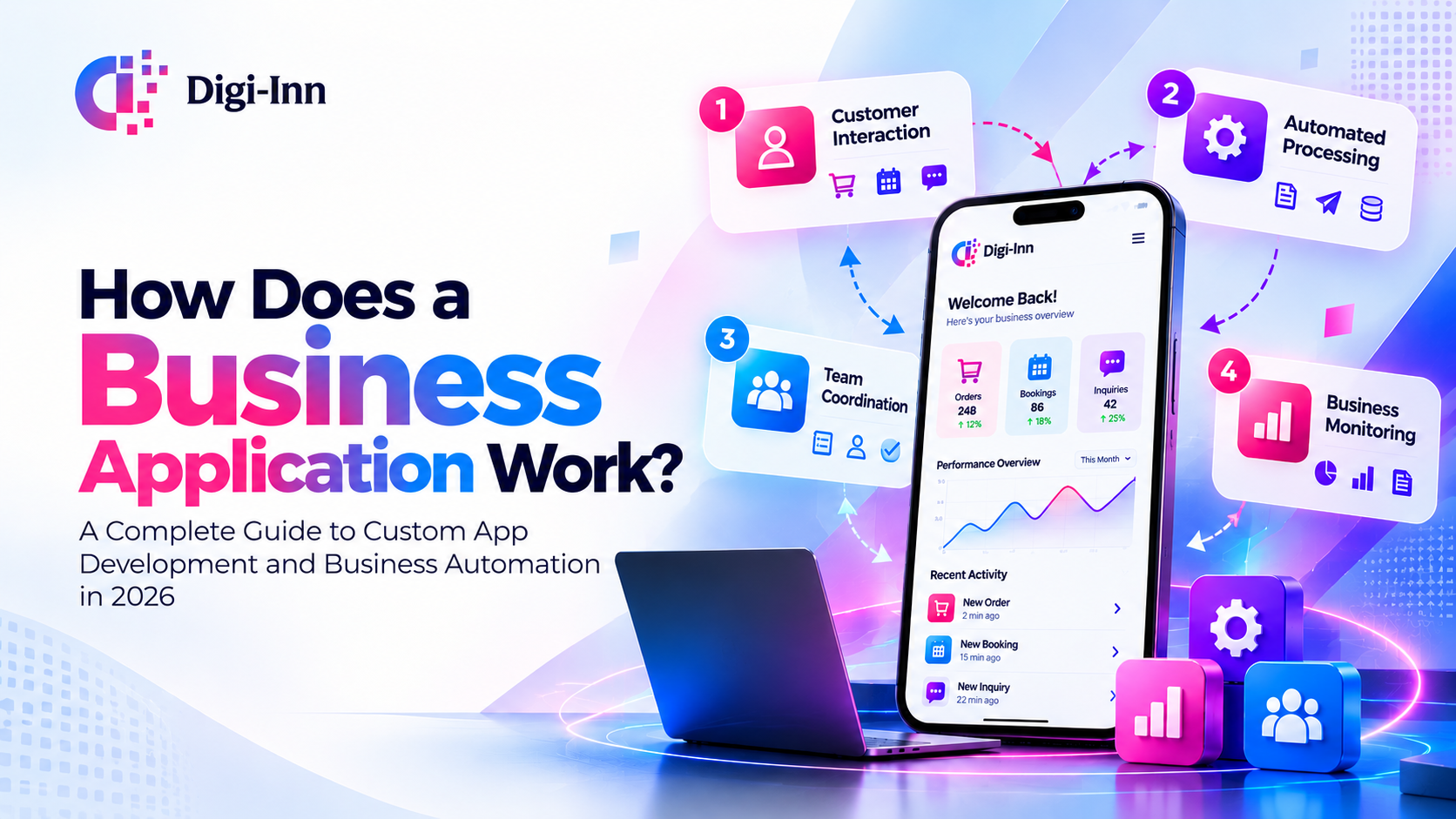
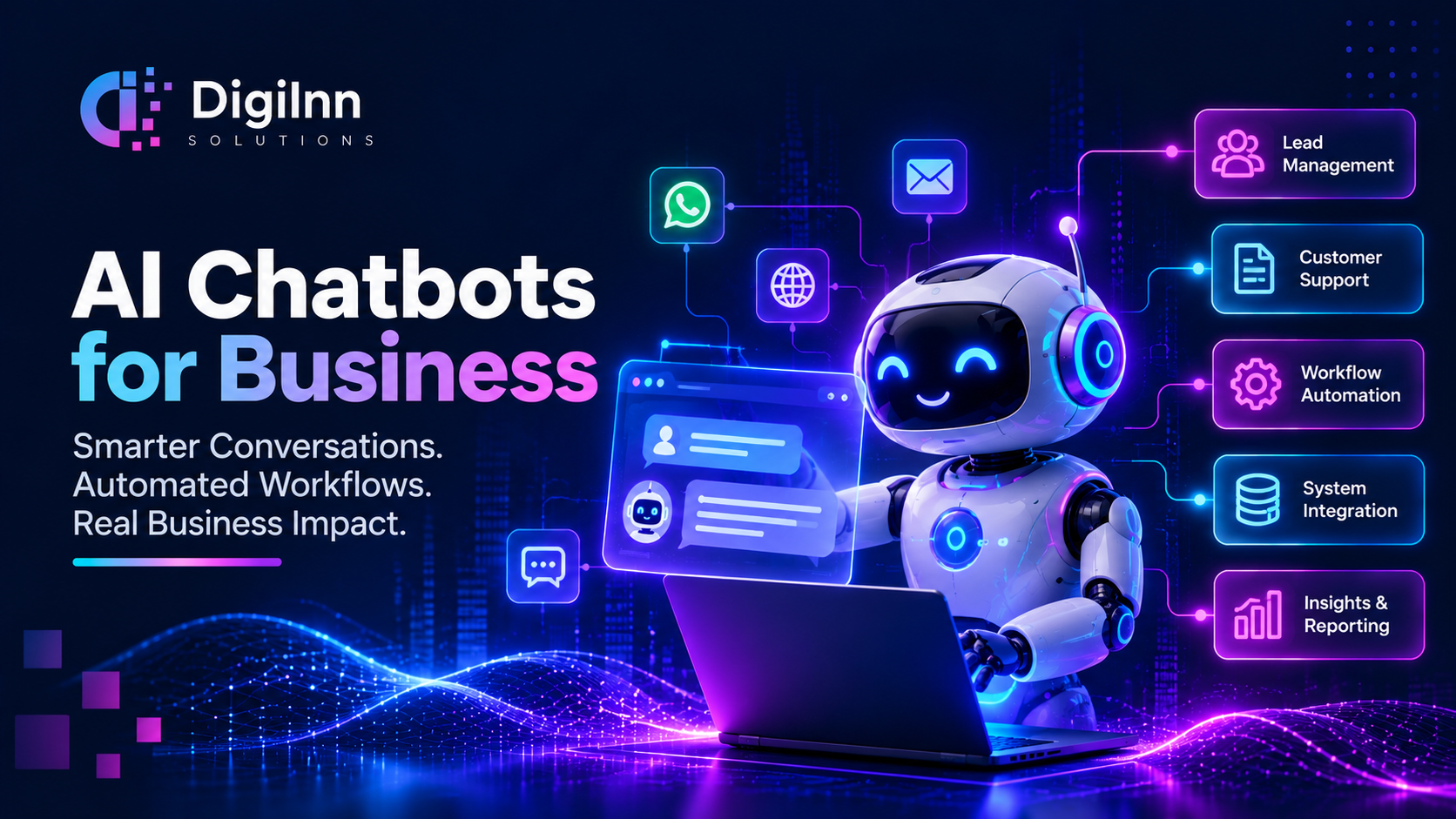
AI Agents for Business in 2026: How Intelligent Automation Is Transforming Business Operations
Oct. 19, 2026, 1:24 p.m.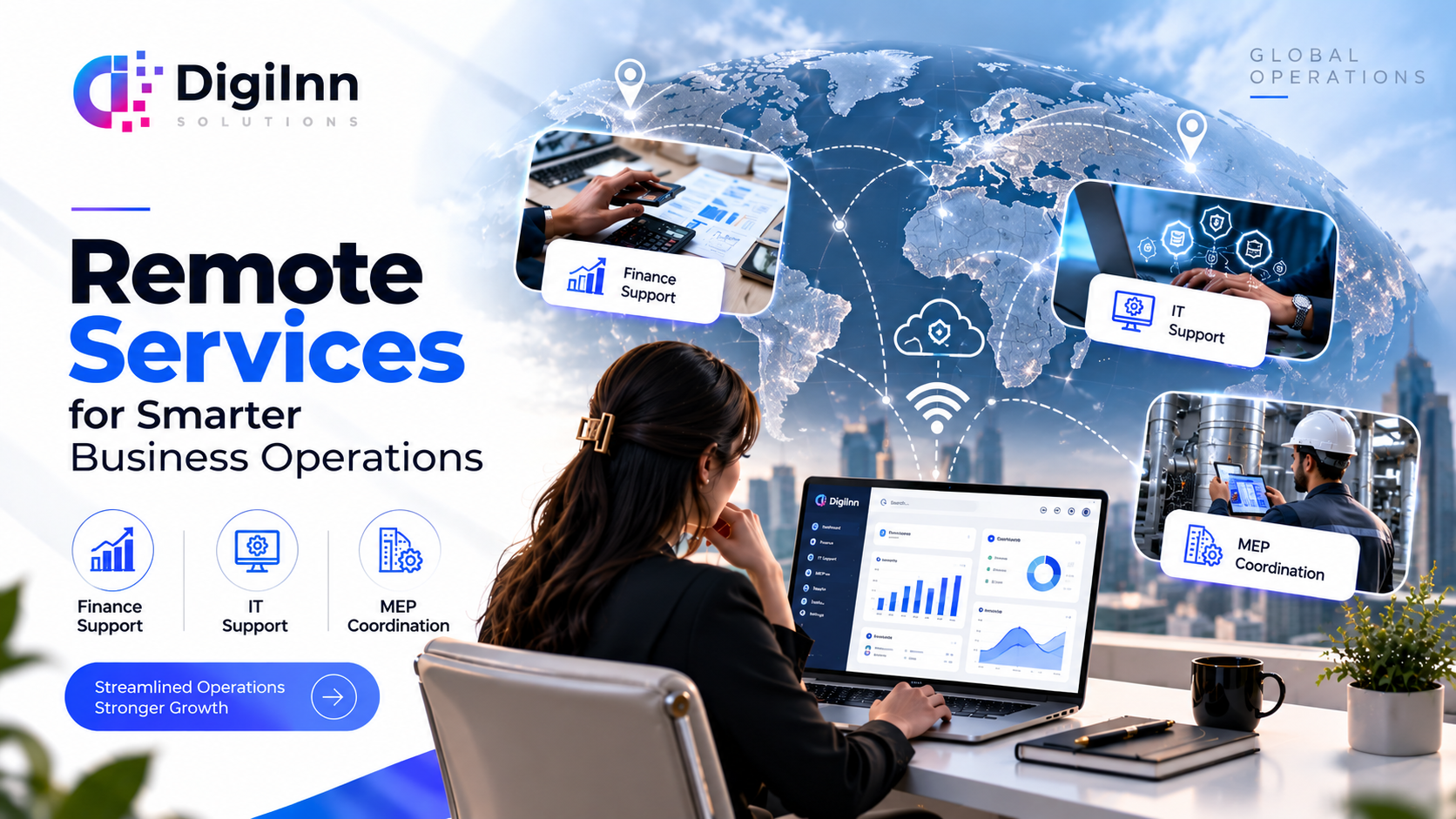
The Future of Business Operations: How Remote Services Help Companies Scale Globally
Oct. 12, 2026, 1:18 p.m.
Beyond Digital: How AI and Automation Are Redefining Business Transformation
Aug. 28, 2026, 2:16 p.m.
Leave A Comments