
04Sep
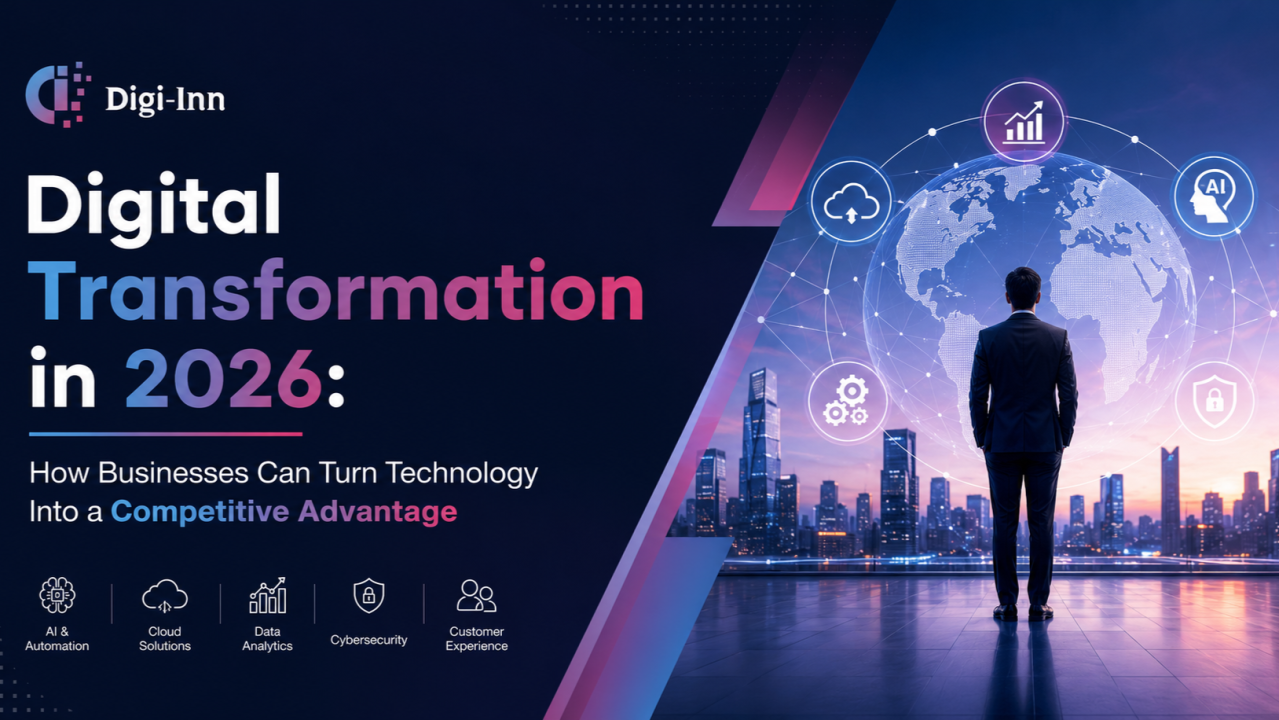
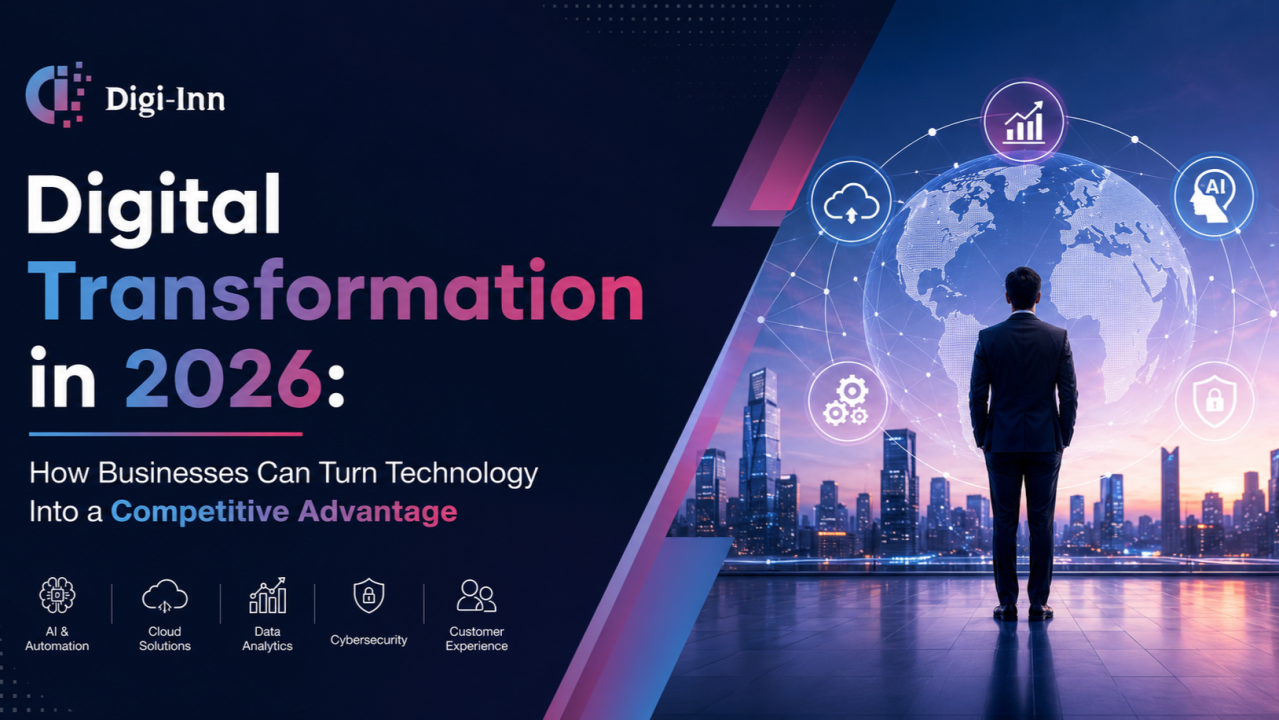
Digital Transformation in 2026: How Businesses Can Turn Technology Into a Competitive Advantage
Digital transformation in 2026 is no longer simply about adopting new software, moving to the cloud, or automating a few repetitive tasks. Technology has become a fundamental part of how businesses compete, operate, serve customers, and create value.
Artificial intelligence, automation, cloud computing, data analytics, cybersecurity, and connected digital platforms are changing the way organizations make decisions and deliver products and services.
But technology alone does not create a competitive advantage.
The real advantage comes from how effectively a business combines technology, people, data, and strategy.
For businesses entering 2026, the question is no longer:
“Should we digitally transform?”
It is:
“How can we use digital transformation to outperform our competitors?”
What Is Digital Transformation?
Digital transformation is the process of using digital technologies to fundamentally improve business operations, customer experiences, decision-making, and business models.
It goes beyond purchasing new technology.
A successful digital transformation strategy may involve:
- Artificial intelligence and machine learning
- Business process automation
- Cloud computing
- Data analytics and business intelligence
- Digital customer experiences
- Cybersecurity and data protection
- Enterprise software integration
- Digital sales and marketing
- AI-powered decision-making
The objective is simple: use technology to make the business smarter, faster, more efficient, and more adaptable.
Why Digital Transformation Matters More in 2026
The competitive landscape is changing rapidly.
Customers expect faster responses. Employees expect better digital tools. Competitors are using AI to reduce costs and improve productivity. At the same time, businesses are collecting more data than ever before.
This creates both an opportunity and a challenge.
Companies that successfully implement business digital transformation can potentially:
- Reduce operational costs
- Improve productivity
- Make faster decisions
- Deliver better customer experiences
- Automate repetitive processes
- Identify new revenue opportunities
- Respond faster to market changes
- Build scalable business operations
Businesses that delay transformation may find themselves competing against organizations that can operate faster and make better use of technology.
Key Digital Transformation Trends in 2026
1. AI Is Moving From Experimentation to Business Strategy
Artificial intelligence is one of the biggest drivers of digital transformation in 2026.
Businesses are increasingly using AI for customer service, marketing, forecasting, content creation, data analysis, internal operations, and decision support.
The competitive advantage isn't simply having access to AI.
It is knowing where AI can create measurable business value.
For example, an organization could use AI to analyze customer behavior, identify sales opportunities, automate support requests, or help employees access information faster.
The goal should not be “use AI everywhere.”
The goal should be:
Use AI where it improves outcomes.
2. Business Automation Will Become a Competitive Necessity
Automation is another major component of modern digital transformation strategy.
Many businesses still rely on employees to perform repetitive tasks such as:
- Data entry
- Report generation
- Lead management
- Invoice processing
- Customer follow-ups
- Internal approvals
- Scheduling
- Inventory updates
Business automation can reduce manual work and allow employees to focus on activities that require creativity, communication, strategy, and problem-solving.
The best automation strategy doesn't replace people unnecessarily.
It augments people with technology.
3. Data Will Become More Valuable Than Ever
Every digital interaction creates data.
But collecting data is not the same as using it effectively.
In 2026, businesses need to focus on turning raw data into actionable insights.
Modern data analytics and business intelligence can help organizations understand:
- Customer behavior
- Sales performance
- Marketing ROI
- Operational efficiency
- Product performance
- Market trends
- Financial performance
A data-driven organization can make decisions based on evidence rather than assumptions.
That can become a significant competitive advantage.
4. Cloud Technology Enables Business Agility
Cloud computing continues to play an important role in technology transformation.
Cloud-based infrastructure allows organizations to access applications, data, and computing resources without relying entirely on traditional on-premise systems.
For growing businesses, cloud technology can provide greater flexibility and scalability.
However, cloud adoption should not happen simply because “everyone is moving to the cloud.”
Businesses should evaluate:
What problem are we solving?
A successful cloud strategy should support business objectives such as scalability, collaboration, accessibility, resilience, and cost optimization.
5. Cybersecurity Must Be Part of Digital Transformation
More technology also means more digital risk.
As organizations become increasingly dependent on connected systems, protecting business data and digital infrastructure becomes essential.
Cybersecurity should therefore be integrated into the digital transformation strategy from the beginning, rather than treated as an afterthought.
Businesses should consider:
- Data protection
- Identity and access management
- Employee security awareness
- Secure cloud infrastructure
- Threat monitoring
- Backup and recovery
- Regulatory compliance
Digital growth without digital security can create significant business risk.
How Businesses Can Turn Technology Into Competitive Advantage
Technology itself is not a competitive advantage.
Effective implementation is.
Here are five ways businesses can turn technology investments into measurable value.
1. Start With Business Problems
One of the biggest mistakes companies make is starting with technology.
Instead of asking:
“What technology should we buy?”
Ask:
“What business problem should we solve?”
For example:
- Are customers waiting too long for support?
- Are employees spending hours on manual reporting?
- Is sales data scattered across multiple platforms?
- Are marketing campaigns difficult to measure?
- Are operational costs increasing?
Once the problem is clear, technology becomes a tool for solving it.
2. Build an Integrated Digital Ecosystem
Businesses often use multiple digital tools, but those tools may not communicate with each other.
This creates data silos and inefficient workflows.
A stronger digital business strategy connects systems across departments.
For example:
Marketing → CRM → Sales → Finance → Customer Support
When these systems communicate effectively, businesses can create a more complete view of the customer and improve operational efficiency.
3. Invest in People Alongside Technology
Technology cannot transform a business without people who know how to use it.
Employee training, digital skills, leadership support, and organizational culture are critical components of successful transformation.
Businesses should invest in:
- Digital skills development
- AI literacy
- Data literacy
- Leadership training
- Change management
- Cross-functional collaboration
The best technology investment can fail if employees don't understand how or why to use it.
4. Measure Digital Transformation ROI
Digital transformation should produce measurable business outcomes.
Companies should establish KPIs before implementing major technology initiatives.
Useful metrics may include:
- Cost reduction
- Revenue growth
- Customer retention
- Conversion rates
- Employee productivity
- Process completion time
- Customer satisfaction
- Return on technology investment
This allows leadership teams to determine which digital initiatives are actually creating value.
5. Create a Culture of Continuous Innovation
Digital transformation is not a one-time project.
Technology will continue to evolve, customer expectations will change, and new competitors will emerge.
Businesses therefore need a culture that supports experimentation and continuous improvement.
Organizations should regularly ask:
What can we automate?
What can we simplify?
What can we measure better?
What can we improve for customers?
These questions can turn digital transformation into an ongoing competitive strategy.
The Biggest Digital Transformation Challenges
Despite the potential benefits, digital transformation is not easy.
Businesses commonly face challenges such as:
Resistance to Change
Employees may be comfortable with existing processes and reluctant to adopt new systems.
Legacy Technology
Older systems can make integration and modernization difficult.
Lack of Digital Skills
Organizations may struggle to find or develop employees with the required technical capabilities.
Poor Data Quality
AI and analytics are only as useful as the data behind them.
High Implementation Costs
Technology investments can become expensive when businesses lack a clear strategy.
Security Risks
More connected systems can create additional cybersecurity vulnerabilities.
The solution is not to avoid transformation.
It is to approach it strategically.
A Practical Digital Transformation Roadmap for 2026
Businesses can use a simple five-stage approach:
1. Assess Evaluate current technology, processes, data, and customer experience.
2. Prioritize Identify the initiatives with the highest potential business impact.
3. Implement Introduce technology through manageable, measurable projects.
4. Measure Track KPIs, ROI, productivity, customer outcomes, and operational improvements.
5. Optimize Use insights and feedback to continuously improve the digital ecosystem.
This approach reduces the risk of spending heavily on technology without achieving meaningful results.
The Future of Digital Transformation
The future of business will not be defined by companies that simply use the most technology.
It will be defined by companies that use technology most intelligently.
AI, automation, cloud computing, analytics, and connected platforms are becoming increasingly accessible. As technology becomes more widespread, the competitive difference will come from execution.
Companies that successfully connect technology with business strategy can build organizations that are:
Faster. Smarter. More efficient. More customer-focused. More adaptable.
That is the real purpose of digital transformation.
Conclusion
Digital transformation in 2026 is moving from a technology initiative to a core business strategy.
Businesses that want to remain competitive need to look beyond individual tools and focus on creating an integrated digital ecosystem where technology supports people, processes, customers, and strategic objectives.
The winning approach is not to adopt every new technology.
It is to identify the right problems, choose the right solutions, empower employees, measure results, and continuously improve.
Because in today's digital economy, technology is no longer just supporting the business.
Technology is becoming the business advantage.
future of digital transformation, digital innovation, business technology.
Digital Transformation in 2026: How Businesses Can Turn Technology Into a Competitive Advantage
Sept. 4, 2026, 12:07 p.m.
Beyond Digital: How AI and Automation Are Redefining Business Transformation
Aug. 28, 2026, 2:16 p.m.
Restaurant Inventory Management: How to Reduce Food Waste, Stock Loss & Improve Profitability
Aug. 20, 2026, 10:48 a.m.



Leave A Comments